

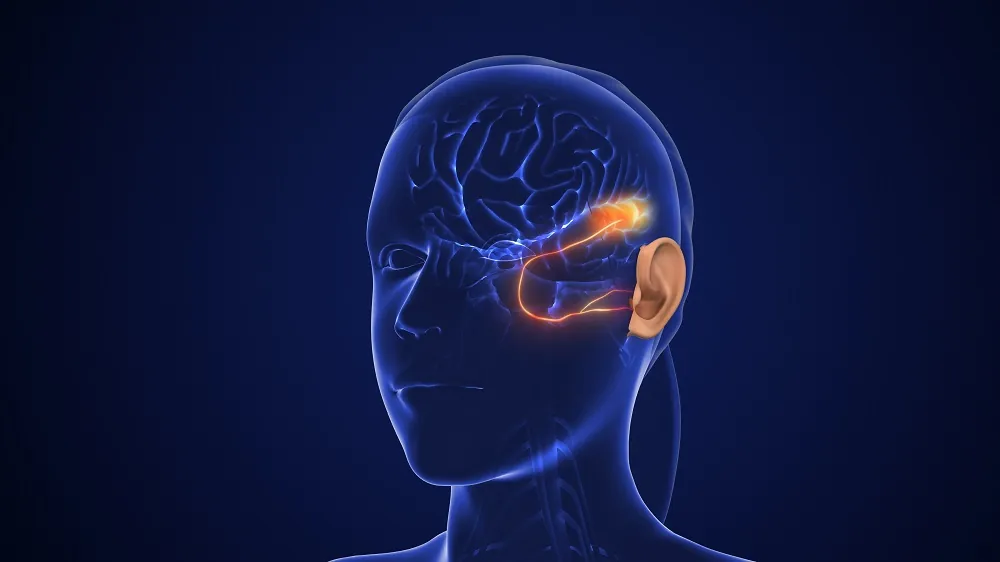
In Aging Cell, researchers have identified bone marrow stromal antigen 2 (BST2) as a key protein in age-related hearing loss in a mouse model.
Neural myelination is necessary for function
Demyelination, the loss of neurons’ protective sheaths, is known to be fundamental in multiple serious neurological disorders, including both amyotrophic lateral sclerosis (ALS) and multiple sclerosis (MS). The proliferation and migration of Schwann cells (SCs) is critical in maintaining neuron myelination [1]; this includes the spiral ganglion neurons (SGNs) that govern hearing, and impairment of these cells leads to motor and sensory problems in mice [2].
Both ALS and MS are accompanied by an increase in BST2, and in a mouse model of experimental autoimmune encephalomyelitis (EAE), another demyelinating disease, suppressing BST2 in SCs halts its progression [3]. However, the precise relationship between BST2, SCs, and aging was “unclear in peer-reviewed literature” according to these researchers, and therefore, they performed this study to investigate it more closely.
Hearing loss is correlated with higher BST2 expression
In their first experiment, the researchers took a look at the SGNs of mice from 3 to 18 months old, with groups being 3 months apart. They noticed that even at only 6 months of age, the mice had very slightly less myelination; at 12 months, they had considerably less, and at 18 months, there was practically no myelin left. Similarly, the mice began to lose their hearing at 12 months, with many tones being far less audible.
Unsurprisingly, this was linked to an increase in BST2 in the SCs, with a direct correlation between hearing thresholds and BST2 expression. This was also accompanied by a decrease in N-cadherin and an increase in E-cadherin, which demonstrates that the SCs had a reduced ability to migrate.
The researchers then administered a BST2-suppressing adeno-associated virus (AAV) into the ears of group of 8-month-old mice. Compared to the untreated and empty-virus control groups, the treated mice enjoyed significantly improved hearing, although not to the level of 4-month-old mice. The myelin of their auditory nerves had been significantly restored, and further experimentation found that the treated mice had significantly fewer senescent Schwann cells.
A correlation with inflammation
SCs with elevated BST2 were also found to have elevations in the senescence- and inflammation-related NF-κB pathway, which led to a decrease in the crucial factor POU6F1. POU6F1 was found to be crucial to SC function, improving healing and cellular migration of SCs while increasing the myelin-promoting factor MPZ, and knocking out POU6F1 blunted the effects of knocking out BST2. Downregulating POU6F1 in 6-month-old mice impaired their hearing, and overexpressing it improved their hearing. This finding corroborates previous research demonstrating that POU6F1 promotes the growth of neurons [4].
The researchers noted that this experiment was performed on a very specific subset of Black 6 mice, C57BL/6J, and that C57BL/6N mice do not lose their hearing in the same way. While this paper reports that “the translational potential of targeting the BST2/POU6F1 axis is substantial,” it also recognizes that related experiments will have to be performed on other animal models and on human tissues before this line of research could proceed to clinical trials.
Literature
[1] Alhamdi, A. A., Mackie, S., Trueman, R. P., & Rayner, M. L. (2025). Pharmacologically targeting Schwann cells to improve regeneration following nerve damage. Frontiers in Cell and Developmental Biology, 13, 1603752.
[2] Gambarotto, L., Russo, L., Bresolin, S., Persano, L., D’Amore, R., Ronchi, G., … & Cescon, M. (2025). Schwann Cell‐Specific Ablation of Beclin 1 Impairs Myelination and Leads to Motor and Sensory Neuropathy in Mice. Advanced Science, 12(5), 2308965.

[3] Manouchehri, Navid, et al. “CD11c+ CD88+ CD317+ myeloid cells are critical mediators of persistent CNS autoimmunity.” Proceedings of the National Academy of Sciences 118.14 (2021): e2014492118.
[4] McClard, C. K., Kochukov, M. Y., Herman, I., Liu, Z., Eblimit, A., Moayedi, Y., … & Arenkiel, B. R. (2018). POU6f1 mediates neuropeptide-dependent plasticity in the adult brain. Journal of Neuroscience, 38(6), 1443-1461.

;)
;)