The Blog

Building a Future Free of Age-Related Disease

Public Longevity Group

Lifespan Research Institute Launches Public Longevity Group

[Mountain View, September 17, 2025]Lifespan Research Institute (LRI) today announced the launch of the Public Longevity Group (PLG), a new initiative focused on bridging the cultural gap between scientific breakthroughs in aging and their public acceptance. To kickstart its work, PLG has opened a crowdfunding campaign to develop tools that measure and strengthen public trust in longevity science.

While the science of longevity biotechnology continues to advance, skepticism and cultural resistance limit progress, with some studies showing that more than half of Americans would reject a safe, proven therapy to extend life. This hesitation poses risks of raising costs, delaying health-promoting regulation, and slowing the delivery of treatments that could combat age-related diseases and extend healthy lifespan.

“The breakthrough that unlocks all other breakthroughs is public trust,” said Sho Joseph Ozaki Tan, Founder of PLG. “Without it, even the most promising therapies may never reach the people they’re meant to help. PLG exists to change that.”

“Persuasion is a science too,” said Keith Comito, CEO of Lifespan Research Institute. “To bring health-extending technologies to the public as quickly as possible, we must approach advocacy with the same rigor as our research. With PLG, we’ll be able to systematically measure and increase social receptivity, making the public’s appetite for credible longevity therapies unmistakable to policymakers, investors, and the public itself.”

PLG is developing the first data-driven cultural intelligence system for longevity—a platform designed to track real-time sentiment, test narratives, and identify which messages resonate and which backfire. Early tools include:

  • The Longevity Cultural Clock: a cultural barometer mapping readiness and resistance across demographics and regions.
  • Sentiment Dashboards: real-time monitoring of public, investor, and policymaker perceptions.
  • Narrative Testing Tools: data-driven analysis that will enable robust pathways to public support.

The crowdfunding campaign will provide the initial $100,000 needed to launch these tools, creating the cultural foundation required for healthier, longer lives.

With a lean, data-driven team, the group aims to provide open-access cultural insights for advocates and policymakers while offering advanced analytics to mission-aligned partners.

Campaign Timeline:

  • Campaign completion: November 2, 2025
  • Dashboard development: Dec 2025 – Feb 2026
  • First survey deployment: Feb – Apr 2026
  • Beta dashboard launch: May 2026
  • First public insight report: June 2026

Supporters can contribute directly at: https://lifespan.io/campaigns/public-longevity-group/

The PLG campaign is sponsored by the members of LRI’s Lifespan Alliance, a consortium of mission-aligned organizations that believe in the promise of extending healthy human lifespan. Newly-joined members include OpenCures, AgelessRx, and Lento Bio.

About Lifespan Research Institute

Lifespan Research Institute accelerates the science and systems needed for longer, healthier lives by uniting researchers, investors, and the public to drive lasting impact. LRI advances breakthrough science, builds high-impact ecosystems, and connects the global longevity community.

Media Contact:

Christie Sacco

Marketing Director

Lifespan Research Institute

christie.sacco@lifespan.io

(650) 336-1780

We would like to ask you a small favor. We are a non-profit foundation, and unlike some other organizations, we have no shareholders and no products to sell you. All our news and educational content is free for everyone to read, but it does mean that we rely on the help of people like you. Every contribution, no matter if it’s big or small, supports independent journalism and sustains our future.
Alzheimer's MRI

Glycosylation’s Role in Alzheimer’s Disease

A recent study suggests that hyperglycosylation in brain tissue can be a hallmark of Alzheimer’s disease [1].

Lesser-known Alzheimer’s molecular features

Pathological deposits of amyloid-β plaques and tau tangles in the brain are probably the most well-known features of Alzheimer’s disease. However, Alzheimer’s also involves various metabolism-related pathologies, such as alterations in glucose metabolism [2], mitochondrial function [3], lipid homeostasis [4], and N-linked glycosylation, a reaction in which a complex carbohydrate (a glycan) is attached to a protein.

N-linked glycans have been found to contribute to protein stability, intercellular communication, and immune signaling [5] and to regulate the blood–brain barrier [6]. Previous studies have reported a link between alterations in glycosylation patterns and neurological disorders [7] and suggested changes in glycosylation in Alzheimer’s disease [8]. Glycosylation has also been found to impact tau post-translational modifications and aggregation [9] and might alter amyloid-β plaque composition and clearance [10].

The authors of this study delved deeper into this topic and leveraged advances in -omics technologies to elucidate the role of glycosylation in Alzheimer’s disease.

Hyperglycosylation appears in Alzheimer’s

Advancements in laboratory techniques enabled researchers to conduct spatial metabolomics, lipidomics, and glycomics (techniques that allow comprehensive examination of metabolites, lipids, and glycans) on frontal cortex samples from deceased patients with Alzheimer’s disease and from healthy donors. “This technology allows us to examine thousands and thousands of molecules created when the body breaks down food or drugs and to uncover intricate pathways that otherwise would stay hidden,” said senior author Ramon Sun, Ph.D., director of the Center for Advanced Spatial Biomolecule Research and associate director for innovation of UF’s McKnight Brain Institute.

While they observed Alzheimer’s disease-specific changes in metabolomics and lipidomics analyses, the differences that caught their attention most were in glycan abundance, which was significantly increased across both white and grey matter regions in samples from patients with Alzheimer’s disease.

The hyperglycosylation observed in human brains was also observed in two mouse models of Alzheimer’s disease. These experiments discovered that those modifications were brain region-specific and preferentially affected brain regions associated with memory, cognitive processing, and neuroinflammation.

Subsequent experiments in human and mouse models found that the increase in glycosylation was the result of increased glycan biosynthesis rather than reduced degradation and recycling, and that the hyperglycosylation in Alzheimer’s disease “predominantly involves an increase in glycosylation modifications on pre-existing glycoproteins rather than the appearance of novel glycosylated proteins.”

Additionally, the researchers identified neurons as the predominant cell population affected by increased glycosylation, supporting the role of glycosylation in Alzheimer’s disease pathogenesis.

A cause or a consequence?

The observed changes in glycosylation can be either a driver of neurodegeneration or a consequence of it. To determine this relationship, the authors experimentally decreased or increased N-glycan levels in the brain.

First, they used two approaches to block glycosylation: genetic engineering tools to reduce the levels of a key enzyme involved in the production of glycans, and a small molecule to block transfer of glycans to proteins. Mouse models of Alzheimer’s disease treated this way showed improvement on a social memory test (which measures “social interaction time across repeated exposures”) compared to controls. Results from those experiments suggest that reducing excessive N-glycosylation results in behavioral benefits.

Increasing glycosylation in mice with Alzheimer’s had the opposite effect. The authors used glucosamine, a molecule that can be incorporated into brain glycans, and supplemented the mice with Alzheimer’s disease with it. Glucosamine supplementation increased brain glycosylation and further exacerbated social memory deficits in those mice. Supplementing glucosamine to healthy mice didn’t result in hyperglycosylation in the brain nor impaired social recognition memory, suggesting that normal brains have mechanisms that can protect them against glucosamine supplementation-induced perturbation.

Together, these results show a causal role for hyperglycosylation in Alzheimer’s disease-associated cognitive dysfunction and suggest that glycosylation can be used as a therapeutic target for Alzheimer’s disease-related neurocognitive deficits. This finding is independent of other Alzheimer’s features such as neuroinflammation or amyloid deposits, which were not affected when glycosylation was experimentally blocked. The authors suggest future studies into small-molecule inhibitors with the ability to selectively decrease pathological glycosylation levels in Alzheimer’s patients’ brains.

“Our results suggest that altered metabolism is a significant contributor to Alzheimer’s progression and, in addition, addressing the metabolic defect could be an important complement to approaches focused on Alzheimer’s plaques and tangles,” Sun said.

Glucosamine supplementation drawbacks

While the results of these experiments can be used for future therapy development, the authors found that the knowledge they gathered here has immediate implications. They demonstrated this by examining glucosamine use in Alzheimer’s disease patients. Glucosamine, which they used in mouse supplementation experiments, is an over-the-counter supplement used for joint health.

From the University of Florida Health system health records, the authors identified 24,481 patients with Alzheimer’s disease-related dementias; among them, 1,896 patients had at least 1 year of documented glucosamine usage following a dementia diagnosis. 41,884 people with mild cognitive impairment were used as controls; 2,750 of them received glucosamine. The analysis indicated that “glucosamine usage was associated with a 25% increase in mortality risk” among patients with Alzheimer’s disease-related dementias, but no significant increase was observed among people with mild cognitive impairment.

When the rate of mild cognitive impairment-to-Alzheimer’s disease-related dementias conversion rate (indicating disease progression) was quantified, the conversion rate was increased by 25% among people who took glucosamine, suggesting that it might accelerate disease progression.

“The electronic health record data are very provocative,” said Matt Gentry, Ph.D., chair of UF’s Department of Biochemistry and Molecular Biology and a study co-author. “While it’s an association and not proof of causality, it does raise an important clinical question that now deserves much more attention.”

“In the United States, there are about seven million people living with Alzheimer’s and millions more with related dementias such as Lewy body or frontotemporal dementia,” Sun adds. “A lot of these people actively take an over-the-counter supplement that could be making their disease progression worse.”

The authors emphasize the need for a well-designed clinical trial to evaluate glucosamine’s impact on cognitive health in people with dementia and to identify which groups are at risk for worsening their dementia symptoms.

We would like to ask you a small favor. We are a non-profit foundation, and unlike some other organizations, we have no shareholders and no products to sell you. All our news and educational content is free for everyone to read, but it does mean that we rely on the help of people like you. Every contribution, no matter if it’s big or small, supports independent journalism and sustains our future.

Literature

[1] Hawkinson, T. R., Liu, Z., Ribas, R. A., Medina, T., Nielsen, R. S., Clarke, H. A., Ma, X., Mueller, A. C., Plasencia, A. F., Sheer, A. L., Simpson, S. T., Soto, C. M., Sudderth, J., Cai, F., Cantrell, A. R., Colpaert, M. G., Shedlock, C. J., Wu, L., Young, L. E. A., Kooser, D. D., … Sun, R. C. (2026). Hyperglycosylation is a metabolic driver of Alzheimer’s disease. Nature metabolism, 10.1038/s42255-026-01538-4. Advance online publication.

[2] Butterfield, D. A., & Halliwell, B. (2019). Oxidative stress, dysfunctional glucose metabolism and Alzheimer disease. Nature reviews. Neuroscience, 20(3), 148–160.

[3] Swerdlow R. H. (2018). Mitochondria and Mitochondrial Cascades in Alzheimer’s Disease. Journal of Alzheimer’s disease : JAD, 62(3), 1403–1416.

[4] Di Paolo, G., & Kim, T. W. (2011). Linking lipids to Alzheimer’s disease: cholesterol and beyond. Nature reviews. Neuroscience, 12(5), 284–296.

[5] Conroy, L. R., Hawkinson, T. R., Young, L. E. A., Gentry, M. S., & Sun, R. C. (2021). Emerging roles of N-linked glycosylation in brain physiology and disorders. Trends in endocrinology and metabolism: TEM, 32(12), 980–993.

[6] Nesselbush, M. C., Luca, B. A., Jeon, Y. J., Jabara, I., Meador, C. B., Garofalo, A., Binkley, M. S., Hui, A. B., van ‘t Erve, I., Xu, N., Shi, W. Y., Liu, K. J., Sugio, T., Kastelowitz, N., Hamilton, E. G., Liu, C. L., Olsen, M., Bonilla, R. F., Wang, Y. P., Jiang, A., … Diehn, M. (2025). An ultrasensitive method for detection of cell-free RNA. Nature, 641(8063), 759–768.

[7] Freeze, H. H., Eklund, E. A., Ng, B. G., & Patterson, M. C. (2015). Neurological aspects of human glycosylation disorders. Annual review of neuroscience, 38, 105–125.

[8] Hawkinson, T. R., Clarke, H. A., Young, L. E. A., Conroy, L. R., Markussen, K. H., Kerch, K. M., Johnson, L. A., Nelson, P. T., Wang, C., Allison, D. B., Gentry, M. S., & Sun, R. C. (2022). In situ spatial glycomic imaging of mouse and human Alzheimer’s disease brains. Alzheimer’s & dementia : the journal of the Alzheimer’s Association, 18(10), 1721–1735.

[9] Losev, Y., Frenkel-Pinter, M., Abu-Hussien, M., Viswanathan, G. K., Elyashiv-Revivo, D., Geries, R., Khalaila, I., Gazit, E., & Segal, D. (2021). Differential effects of putative N-glycosylation sites in human Tau on Alzheimer’s disease-related neurodegeneration. Cellular and molecular life sciences : CMLS, 78(5), 2231–2245.

[10] Perdivara, I., Petrovich, R., Allinquant, B., Deterding, L. J., Tomer, K. B., & Przybylski, M. (2009). Elucidation of O-glycosylation structures of the beta-amyloid precursor protein by liquid chromatography-mass spectrometry using electron transfer dissociation and collision induced dissociation. Journal of proteome research, 8(2), 631–642.

Young man as old man

Biological Aging May Be Driving Increased Early-Onset Cancer

A new study links accelerated aging to early-onset solid cancers, while showing that this gap is becoming wider with each new generation [1].

Why do more young people get cancer?

While life expectancy has been on the rise for decades (though it has slowed in recent years), counterintuitively, early-onset cancer is becoming more common. Cancers diagnosed before age 50 rose significantly worldwide between 1990 and 2019, and the trend is getting steeper [2].

Scientists have been struggling to understand the causes behind this phenomenon. Various environmental exposures, from ultra-processed food to air pollution to microplastic contamination, have been proposed. This is even more baffling considering that the prevalence of some of the most carcinogenic habits, such as smoking and alcohol consumption, has been falling.

A new study from Washington University in St. Louis, published in Nature Medicine, does not claim to provide a clear solution to this puzzle. Instead, the authors turned to the concept of the “age gap” – the difference between a person’s biological and chronological age – and asked whether this gap is wider for younger generations and whether it correlates with cancer statistics.

“Our ultimate goal is to decode how modern environments become biologically embedded to drive cancer risk, transforming prevention from broad recommendations to personalized interventions,” said Yin Cao, ScD, a molecular epidemiologist and an associate professor of surgery and of medicine at WashU Medicine. “This brings us closer to identifying risk earlier and developing prevention strategies that are tailored to an individual’s biology.”

Measuring how old you really are

The main tool that the researchers used to estimate biological age was PhenoAge, a popular clock based on a set of nine blood biochemistry markers and originally trained to predict mortality and morbidity. Turning to the UK Biobank, a repository of health data on half a million Britons, they asked if this age gap has shifted across generations.

Apparently, it has. Among more than 154 thousand participants under 55, those born in 1965 to 1974 carried a noticeably wider gap than their parents’ generation born in 1950 to 1954 (technically, a 0.23-standard-deviation increase). In other words, younger generations may be biologically older than their parents were at the same age, though the authors’ measurement is relative rather than absolute, so it does not establish that quite so cleanly.

An older body, a higher cancer risk

Tracking the participants over time, the researchers found that a larger age gap predicted more early-onset solid cancer. Each standard deviation increase raised the overall risk by 8%. The effect was concentrated at specific sites: lung (a massive 57% increase per standard deviation), gastrointestinal cancers, and uterine cancer.

Crucially, the association was much weaker for the same cancers diagnosed after 55, which suggests that this gap matters most early in life. It also survived adjustment for inherited risk factors, such as telomere length (a classic marker of cellular aging) and polygenic risk scores for both aging and cancer. Essentially, whatever the age gap is capturing, it is probably more than genetics.

The authors repeated the analysis with a blood-based clock that is trained to track chronological age (KDM) along with a metabolomic clock based on blood metabolites. While neither reproduced the overall association cleanly, both flagged the same outlier – lung cancer – and the metabolomic clock also picked up uterine cancer.

To connect the damage to specific organs, the team built organ-specific aging clocks using proteomics. In this analysis, an aged immune system tracked with early-onset lung cancer, and aged adipose tissue tracked with early-onset colorectal cancer. Both associations held up even after accounting for whole-body aging, hinting that individual organs age on their own schedules and carry their own risks – an idea supported by recent research on organ-specific aging [3].

Does it hold outside Britain?

Finally, the authors analyzed the pattern in a different population: the US All of Us Research Program, which skews younger and more diverse. The generational difference was even sharper: those born in the 1990s carried a much wider gap than people born in the late 1960s (a 0.92-standard-deviation increase). Here too, a bigger gap predicted early-onset cancer, with each standard deviation increase raising risk by 22%.

This observational study cannot prove causation, but it offers a testable idea: that whatever is aging us faster may also be contributing to the risk of early cancer. “If we can identify younger people with the highest cancer risk when they are still healthy, we can focus on prevention and early-detection strategies for the individuals who will benefit most from early interventions,” Cao said.

We would like to ask you a small favor. We are a non-profit foundation, and unlike some other organizations, we have no shareholders and no products to sell you. All our news and educational content is free for everyone to read, but it does mean that we rely on the help of people like you. Every contribution, no matter if it’s big or small, supports independent journalism and sustains our future.

Literature

[1] Tian, R., Zong, X., Ren, D. et al. (2026). Biological aging and generational shifts in early-onset cancer risk. Nat Med.

[2] Zhao, J., Xu, L., Sun, J., Song, M., Wang, L., Yuan, S., … & Li, X. (2023). Global trends in incidence, death, burden and risk factors of early-onset cancer from 1990 to 2019. BMJ oncology, 2(1), e000049.

[3] Oh, H. S. H., Rutledge, J., Nachun, D., Pálovics, R., Abiose, O., Moran-Losada, P., … & Wyss-Coray, T. (2023). Organ aging signatures in the plasma proteome track health and disease. Nature, 624(7990), 164-172.

RNA and DNA interaction

A Transcriptional Failure Leads to Systemic Inflammation

Researchers have found that bound pieces of RNA and DNA in the cytoplasm of senescent cells encourage these cells to secrete inflammatory factors.

When transcription gets sticky

As part of the transcription process that produces necessary proteins, RNA must chemically interact with DNA. When it binds to DNA and integrates itself into the genome, it forms a three-stranded loop called an R-loop, and these are commonly found on active genes. R-loops can also form as reactions to DNA damage, allowing for RNA-mediated repair [1].

In healthy nuclei, the formation and dissolution of R-loops are tightly regulated processes that are both controlled by enzymes called helicases [2]. When these processes go wrong and R-loops stick around longer than they should, this leads to genomic instability [3]. This triggers internal inflammatory processes, which lead to chronic inflammation [4], a condition well-known in the context of age-related diseases as inflammaging.

Fewer but in the wrong place

These researchers began with a population of embryonic human lung fibroblasts (IMR90), some of which had been driven senescent through the activation of cancer-related genes, and used an established tool to map R-loops throughout the genome [5]. As R-loops are closely associated with gene transcription [6], and senescent cells transcribe fewer genes than proliferating cells [7], the researchers’ first finding was entirely expected: senescent cells have fewer R-loops than proliferating ones.

However, the senescent cells were found to have more R-loops in the cytoplasm outside the nucleus. Most of these R-loops had come from the nucleus, but others had come from the mitochondria, which have their own DNA (mtDNA). These cytoplasmic R-loops were largely derived from alpha-satellite repeats, regions that commonly form R-loops in the nuclei of senescent cells.

This export of R-loops from the nucleus to the cytoplasm is governed by two endonucleases that normally perform repair functions: XPF and XPG. Both of these endonucleases were found to be upregulated in senescent IMR90 cells, and knocking down either of them reduced the number of cytoplasmic R-loops; administering KPT-330, which inhibits this transport, achieved similar results, as did knocking down the related export protein XPO1.

A direct link to inflammation

The researchers then caused senescent IMR90 cells to express another compound that increases the lysosomal digestion of cytoplasmic R-loops, RH-NES. While it had no effect on senescence itself, RH-NES expression reduced the amount of inflammatory factors and so reduced the expression of senescence-associated secretory phenotype (SASP)-related genes, which promote inflammation in other cells when released. Reducing the number of cytoplasmic R-loops through other methods decreased SASP production as well.

This was due to these R-loops forming cytoplasmic chromatin fragments (CCFs), which have been previously documented to encourage SASP production [8]; these researchers found significant co-localization of R-loops and CCFs, which were also co-located with the DNA damage marker γH2AX. Suppressing CCF formation with trichostatin A also reduced SASP production. Further work confirmed that R-loop production and CCF formation are entirely independent processes that occur in separate parts of the cell.

This binding of R-loops and CCFs was found to be due to DDX1, an RNA helicase that is part of the DNA damage response [9]. DDX1 interacted with XPO1 in senescent cells more than in proliferating cells, and senescence caused more of it to migrate into the cytoplasm. The precise molecular residues that DDX uses to bind to XPO1 were elucidated, and variants of DDX1 that could not bind to XPO1 in this way were unable to be exported into the cytoplasm. Senescent cells with less DDX1 in the cytoplasm, as expected, produced less of the SASP. This increase in SASP activity was also found to involve the well-known DNA sensor cGAS, which was required for the co-location of R-loops into CCFs.

The SASP makes cells a target

The researchers tested the effects of DDX1 in vivo, finding both positive and negative effects. Knocking down DDX1 in senescent fibroblasts co-located with ovarian cancer cells reduced the growth of tumors when this combination was injected into mice, as the SASP encourages tumor growth.

On the other hand, knocking down DDX1 in premalignant hepatocytes injected into mice reduced the immune system’s ability to identify and destroy these cells. Immune cells use the SASP as a targeting vector, and suppressing it in this way allowed these senescent cells to evade immune clearance.

Still, treating 22-month-old female mice with KPT-330 significantly increased their lifespan. The researchers focused on the liver, as this organ’s senescence is strongly linked to SASP production. KPT-330 treatment reduced liver damage, liver fibrosis, total cholesterol, and overall inflammation in these animals.

The researchers hold that their work has created a new potential treatment for fighting systemic inflammation brought about by senescence. While this may allow senescent cells to evade immune clearance, the excessive circulating SASP is well-known to cause inflammaging and its attendant problems. Further work will determine whether or not this trade-off is truly beneficial.

We would like to ask you a small favor. We are a non-profit foundation, and unlike some other organizations, we have no shareholders and no products to sell you. All our news and educational content is free for everyone to read, but it does mean that we rely on the help of people like you. Every contribution, no matter if it’s big or small, supports independent journalism and sustains our future.

Literature

[1] Petermann, E., Lan, L., & Zou, L. (2022). Sources, resolution and physiological relevance of R-loops and RNA–DNA hybrids. Nature reviews Molecular cell biology, 23(8), 521-540.

[2] Yang, S., Winstone, L., Mondal, S., & Wu, Y. (2023). Helicases in R-loop formation and resolution. Journal of Biological Chemistry, 299(11), 105307.

[3] Hamperl, S., & Cimprich, K. A. (2014). The contribution of co-transcriptional RNA: DNA hybrid structures to DNA damage and genome instability. DNA repair, 19, 84-94.

[4] Chatzidoukaki, O., Stratigi, K., Goulielmaki, E., Niotis, G., Akalestou-Clocher, A., Gkirtzimanaki, K., … & Garinis, G. A. (2021). R-loops trigger the release of cytoplasmic ssDNAs leading to chronic inflammation upon DNA damage. Science advances, 7(47), eabj5769.

[5] Yan, Q., Shields, E. J., Bonasio, R., & Sarma, K. (2019). Mapping native R-loops genome-wide using a targeted nuclease approach. Cell reports, 29(5), 1369-1380.

[6] Niehrs, C., & Luke, B. (2020). Regulatory R-loops as facilitators of gene expression and genome stability. Nature reviews Molecular cell biology, 21(3), 167-178.

[7] Papantonis, A., Antebi, A., Partridge, L., & Beyer, A. (2024). Age-associated changes in transcriptional elongation and their effects on homeostasis. Trends in Cell Biology.

[8] Dou, Z., Ghosh, K., Vizioli, M. G., Zhu, J., Sen, P., Wangensteen, K. J., … & Berger, S. L. (2017). Cytoplasmic chromatin triggers inflammation in senescence and cancer. Nature, 550(7676), 402-406.

[9] Li, L., Germain, D. R., Poon, H. Y., Hildebrandt, M. R., Monckton, E. A., McDonald, D., … & Godbout, R. (2016). DEAD Box 1 facilitates removal of RNA and homologous recombination at DNA double-strand breaks. Molecular and cellular biology, 36(22), 2794-2810.

Blood vessel

Epigenetic Drug Targets Fat, Improving Blood Vessel Health

Scientists have targeted the thin fat layer around blood vessels with a transcription inhibitor, reducing symptoms of cardiometabolic disease [1].

When vessels can’t “just relax”

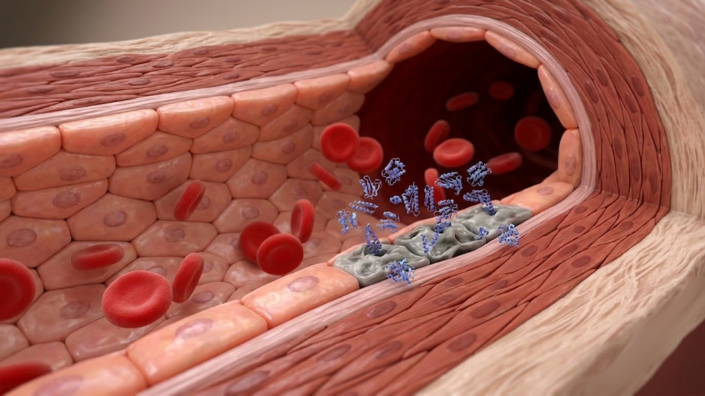
Cardiometabolic disease (CMD) – characterized, among other things, by obesity combined with high blood pressure – is one of the largest drivers of cardiovascular death [2]. It does its damage partly through continuous low-grade inflammation that injures blood vessels, including the endothelium, every vessel’s single-cell lining. Healthy endothelial tissue releases nitric oxide (NO), a gas that signals the surrounding muscle to relax. When the endothelium is damaged, vessels lose this ability to dilate on demand (“endothelial dysfunction”), which is an early step on the road to heart attacks and certain kinds of heart failure [3].

A new paper from the University of Zurich, published in Cell Reports, focuses on an underappreciated player: perivascular adipose tissue (PVAT), a layer of fat that most small arteries are wrapped in. This fat and the vessel exchange signals via what the researchers call “the vascular-fat interface.” In healthy people, these signals actually help the vessel relax, but in obesity and hypertension, the interface flips to a pro-inflammatory, constriction-inducing state and begins harming the vessel [4].

Targeting transcription of stress-related factors

The authors took small arteries from fat biopsies in 27 obese, hypertensive patients and studied how these arteries dilate. Compared with arteries taken from lean normotensive controls, the patients’ vessels were structurally remodeled and functionally impaired, showing blunted relaxation. This came with more reactive oxygen species (ROS), less available NO, and more activity of genes that produce inflammatory factors, including IL-1β, IL-6 and TNF-α. Incubating the vessels with antibodies against these inflammatory cytokines partially improved function, confirming that inflammation is a real contributor.

The team then treated the vessels with the small molecule RVX-208, a BET inhibitor. BET proteins recognize acetyl tags on the spool-like proteins that DNA wraps around (histones) and facilitate switching the tagged genes’ transcription. They also disproportionately amplify stress- and disease-driven programs rather than ordinary housekeeping genes, which makes their inhibition relatively safe. The researchers reasoned that inhibiting BET proteins would calm down those upstream stress-related signals. RVX-208 indeed improved relaxation, cut ROS, restored NO, and suppressed inflammatory genes more strongly than any of the single-cytokine antibodies.

“Instead of targeting one downstream molecule at a time, we aimed to retune the fat’s entire gene activity program,” said UZH cardiologist and study head Francesco Paneni.

To localize the effect, the team then compared paired vessels with PVAT left intact versus surgically removed (“naked”). In accordance with PVAT’s dual nature, leaving it intact improved function (compared to the “naked” vessels) in healthy controls but markedly worsened it in patients. RVX-208 had no effect on healthy PVAT-intact vessels but completely rescued patient PVAT-intact vessels. Its benefit was roughly doubled when PVAT was present, and it even converted pro-constriction PVAT back to the healthy, relaxation-promoting state. These results suggest that the BET-driven injury is coming from the fat, not the vessel wall.

In a mouse CMD model, RVX-208 rescued arterial stiffness and endothelial function (again more so with PVAT intact) and blunted the inflammatory signature in both vessels and PVAT. Diseased PVAT also showed signs of mitochondrial dysfunction, which was rescued by RVX-208.

The downstream enzyme

Among the 84 cardiometabolic genes in mouse PVAT that the researchers analyzed, RVX-208 downregulated 22. The standout hit was HK2 (hexokinase-2), the enzyme that facilitates glycolysis, and its change was confined to PVAT. The treatment essentially reduced glucose burning, which was contributing to mitochondrial dysfunction and inflammation, and increased fat burning.

The team then tested causation directly in primary human fat cells. Overexpressing HK2 in healthy adipocytes made them pro-inflammatory, while silencing it calmed the inflammation. Conditioned media from HK2-overexpressing adipocytes induced inflammation in human aortic endothelial cells, demonstrating that the fat-to-vessel signals are conveyed by secreted factors. Finally, a selective HK2 inhibitor applied to vessels from human patients improved endothelial function (again, more so in the presence of PVAT), showing that hitting HK2 directly reproduces the benefits of BET inhibition.

“Lowering the enzyme’s activity, either indirectly by altering the epigenetic readers that control its gene or directly on the enzyme itself, blunted the fat’s inflammatory behavior and restored normal vessel function in the samples we studied,” said Paneni.

BET inhibitors have already been tested in cardiovascular trials, but according to the authors, those trials enrolled end-stage patients, where so much damage has accumulated that any benefit may be blunted. “Instead of solely treating downstream risk factors such as high blood pressure, cholesterol or blood sugar after damage has already begun, epigenetic therapies aim to reprogram the tissue processes that contribute to vascular damage,” said Paneni.

We would like to ask you a small favor. We are a non-profit foundation, and unlike some other organizations, we have no shareholders and no products to sell you. All our news and educational content is free for everyone to read, but it does mean that we rely on the help of people like you. Every contribution, no matter if it’s big or small, supports independent journalism and sustains our future.

Literature

[1] Mengozzi, A., Costantino, S., Mongelli, A., Duranti, E., Mohammed, S. A., Gorica, E., … & Paneni, F. (2026). BET-induced metabolic reprogramming fuels inflammation at the vascular-fat interface in mice and patients with cardiometabolic disease. Cell Reports, 45(6).

[2] Ndumele, C. E., Rangaswami, J., Chow, S. L., Neeland, I. J., Tuttle, K. R., Khan, S. S., … & American Heart Association. (2023). Cardiovascular-kidney-metabolic health: a presidential advisory from the American Heart Association Circulation, 148(20), 1606-1635.

[3] Widmer, R. J., & Lerman, A. (2014). Endothelial dysfunction and cardiovascular disease. Global Cardiology Science and Practice, 2014(3).

[4] Agabiti-Rosei, C., Saxton, S. N., De Ciuceis, C., Lorenza Muiesan, M., Rizzoni, D., Agabiti Rosei, E., & Heagerty, A. M. (2024). Influence of perivascular adipose tissue on microcirculation: a link between hypertension and obesity. Hypertension, 81(1), 24-33.

Muscle tissue

How Antioxidants Can Selectively Remove Some Senescent Cells

In Aging Cell, researchers have described the way that antioxidants work against senescence in muscle cells by altering mTOR signaling.

Senescent cells don’t sense nutrients properly

Oxidative stress and mTOR signaling, which determines how cells respond to nutrient availability, are among the most well-researched and well-known facets of aging biology; mTOR, the mechanistic target of rapamycin, gets its name from a similarly well-researched compound. Specifically, complex 1 of mTOR (mTORC1) is one of the principal regulators of how cells conduct metabolism [1], and dysregulated mTORC1 signaling has been found to induce age-related muscle loss (sarcopenia) [2] and regularly appears in senescent cells [3].

When muscle-producing stem cells (myoblasts) become senescent instead of proliferating, they become incapable of restoring muscle tissue after injury [4] and emit the senescence-associated secretory phenotype (SASP), which itself has been found to be linked to mTOR signaling [5]. However, these researchers lamented that most research into mTOR has been focused on fibroblasts rather than on myoblasts, and so they conducted their own investigation to fill that gap.

Senescent cells handle mTORC1 differently

In their first experiment, the researchers used etoposide to chemically drive a population of myoblasts into senescence. Noting that mTORC1 dysfunction can only be properly analyzed after manipulating its activators [6], they analyzed the behavior of these cells in a growth-promoting medium and in a nutrient-poor medium that lacked amino acids. As expected, regardless of nutrient availability, the senescent cells demonstrated upregulated expression of proteins that were downstream of mTORC1.

mTORC1 is related to nutrient sensing from both external and internal sources: the cell’s consumption of its own organelles through autophagy can activate mTORC1. However, autophagy was found to be unrelated to senescence-related increased mTORC1 signaling in these cells; the researchers found that mTORC1 is not co-located with lysosomes in senescent myoblasts the way that it is in other cell types, and hindering autophagy in senescent myoblasts did not diminish the downstream proteins of mTORC1. Instead, Akt and insulin/growth factor signaling were found to drive the increase in mTORC1 in these cells.

Oxidative stress directly affects mTOR

The researchers then investigated SASP components to determine how they affect mTORC1. Intestingly, blunting the effects of SASP cytokines through a JAK inhibitor had no effects on mTORC1 in senescent cells. Instead, the antioxidants Tiron and N-acetylcysteine (NAC) were found to significantly inhibit mTORC1, preventing its overexpression when nutrients were scarce. This increase in oxidative stress was found to be due to the increased mitochondrial count within senescent cells. Directly exposing non-senescent cells to hydrogen peroxide, a well-known oxidant, increased mTORC1 activity under starvation conditions as well.

Possibly the researchers’ most critical finding was that antioxidant treatment can be fatal to senescent cells. Under nutrient starvation conditions, senescent cells treated with NAC expressed greater markers of DNA damage and membrane stress. Continuing to treat these starved senescent cells with antioxidants decreased the number of these cells and decreased the surviving cells’ proteins. Cleaved caspase-3 expression confirmed that more of these cells were being killed off by antioxidant exposure.

These effects were specific to senescent cells; treating proliferating myoblasts with NAC bolstered their nucleic membranes while weakening the nucleic membranes of senescent myoblasts. This is in line with research suggesting that existing senolytics work through mTOR signaling [7], which this study has found to be strongly affected by antioxidants. Giving antioxidants to senescent myoblasts also diminished their SASP production and increased their ability to differentiate, which was nearly eliminated with senescence.

This was an exploratory cellular study; mice were not involved, and the researchers conducted only limited gene expression analyses. However, these results must be taken seriously, as they point to a potentially concerning possibility: to maximize the effects of antioxidants, and possibly some senolytics, against senescent cells, caloric or other dietary restriction may be required as well. Further work is required to determine if this is indeed true and if this study’s results hold up in vivo.

We would like to ask you a small favor. We are a non-profit foundation, and unlike some other organizations, we have no shareholders and no products to sell you. All our news and educational content is free for everyone to read, but it does mean that we rely on the help of people like you. Every contribution, no matter if it’s big or small, supports independent journalism and sustains our future.

Literature

[1] Liu, G. Y., & Sabatini, D. M. (2020). mTOR at the nexus of nutrition, growth, ageing and disease. Nature reviews Molecular cell biology, 21(4), 183-203.

[2] Tang, H., Inoki, K., Brooks, S. V., Okazawa, H., Lee, M., Wang, J., … & Shrager, J. B. (2019). mTORC1 underlies age‐related muscle fiber damage and loss by inducing oxidative stress and catabolism. Aging cell, 18(3), e12943.

[3] Carroll, B., Nelson, G., Rabanal-Ruiz, Y., Kucheryavenko, O., Dunhill-Turner, N. A., Chesterman, C. C., … & Korolchuk, V. I. (2017). Persistent mTORC1 signaling in cell senescence results from defects in amino acid and growth factor sensing. Journal of Cell Biology, 216(7), 1949-1957.

[4] Sousa-Victor, P., Gutarra, S., García-Prat, L., Rodriguez-Ubreva, J., Ortet, L., Ruiz-Bonilla, V., … & Muñoz-Cánoves, P. (2014). Geriatric muscle stem cells switch reversible quiescence into senescence. Nature, 506(7488), 316-321.

[5] Herranz, N., Gallage, S., Mellone, M., Wuestefeld, T., Klotz, S., Hanley, C. J., … & Gil, J. (2015). mTOR regulates MAPKAPK2 translation to control the senescence-associated secretory phenotype. Nature cell biology, 17(9), 1205-1217.

[6] Carroll, B., Nelson, G., Rabanal-Ruiz, Y., Kucheryavenko, O., Dunhill-Turner, N. A., Chesterman, C. C., … & Korolchuk, V. I. (2017). Persistent mTORC1 signaling in cell senescence results from defects in amino acid and growth factor sensing. Journal of Cell Biology, 216(7), 1949-1957.

[7] Di Micco, R., Krizhanovsky, V., Baker, D., & d’Adda di Fagagna, F. (2021). Cellular senescence in ageing: from mechanisms to therapeutic opportunities. Nature reviews Molecular cell biology, 22(2), 75-95.

Lab mouse facing viewer

Late-Life Gene Therapy Boosts Lifespan in Mice by 20%

In a new study, muscle-targeted viral-vector-based delivery of the protein FGF21 significantly increased median lifespan in male mice and improved many healthspan markers [1].

Control your energy

Metabolic dysregulation is a core cause of aging [2]. As animals (and people) age, they tend to gain fat, develop insulin resistance, and run their cellular energy systems less efficiently. Interventions that improve metabolic health, like exercise and caloric restriction, do extend healthspan, but they might be hard to sustain, which creates the need to mimic them therapeutically.

In a new study from the Autonomous University of Barcelona, published in Molecular Therapy, the researchers focused on fibroblast growth factor 21 (FGF21), a naturally produced hormone that acts as an energy use coordinator. It has been a hot therapeutic target for metabolic disease, and this same group had previously shown that a one-time FGF21 gene therapy could reverse fatty liver disease, diabetes, and obesity in mice [3]. That approach is now heading toward the clinic via Kriya Therapeutics, with which the senior author, Professor Fatima Bosch, is affiliated.

The key idea was to turn a small set of muscles into a permanent FGF21 factory. The authors used an adeno-associated virus (AAV) to deliver the FGF21 gene into the leg muscles of 13-month-old male mice. Serum FGF21, measured at 15, 21, and 26 months, stayed durably elevated, traced specifically to the injected muscle.

Lean, healthy, smart, long-lived

As they get old, mice tend to gain weight and develop insulin resistance. However, the treated mice progressively lost weight back down to the level of young (2-month-old) animals, while controls kept getting chubbier. Critically, their food intake remained unchanged, meaning that the effect was not from consuming fewer calories.

The treatment produced an array of healthspan benefits: it increased glucose tolerance, boosted fitness across several tests, and improved cognition. It was not all solely about healthspan – importantly, median lifespan rose from 28 to 34 months. This 20.5% increase is even more impressive considering that the treatment started relatively late in life. A separate, very small cohort treated at 22 months also outlived their untreated peers.

AAV results

At 21 months, when implicit age-related changes are already happening, the treated mice had smaller, less lipid-stuffed fat cells, on par with young controls. They also exhibited lower inflammatory markers and increased energy expenditure, which explains the weight loss.

Consistent with higher energy expenditure and increased fitness, the treated mice’s mitochondrial function was improved. The tests showed enrichment of mitochondrial energy pathways, upregulated mitochondrial protein-synthesis machinery, and increased mitochondrial DNA (mtDNA) content, indicating more mitochondria.

Detoxification enzymes in the liver were upregulated, contrary to the age-related downregulation observed in controls (detox capacity normally falls with age). At 26 months – the second control point – control livers showed age-related abnormal protein-aggregate deposits (amyloidosis), which were absent in treated mice.

Control kidneys, especially at 26 months, showed increased weight, elevated injury markers, and amyloidosis. This treatment normalized all of these and reversed the overexpression of inflammatory and fibrotic markers.

Aged control hearts showed structural damage, amyloid deposits, and abundant fibrosis, while treated hearts had neither. Mitochondrial pathways were upregulated, while fibrotic pathways were downregulated.

Muscle morphology looked normal at 21 months in all mice, but by 26 months, controls developed muscle fibrosis. These effects were absent in treated mice. Again, this was accompanied by downregulation of fibrotic pathways and upregulation of ribosomal and translation-factor genes, showing preserved protein-synthesis capacity (whose decline is a hallmark of aging muscle).

Less data on females

At 27 months, treated mice had memory equivalent to 2-month-old animals in the novel object recognition test, plus improved motor learning. The same molecular themes recurred in the brain: enriched mitochondrial energy pathways and protein-translation machinery. The treatment also raised circulating β-hydroxybutyrate, a ketone body that the brain can use as an alternative fuel. Most directly relevant to cognition, treated brains showed increased expression of synaptic genes.

FGF21 has been associated with bone loss in several previous studies. Here, however, after more than a year of elevated FGF21, bone-formation and bone-resorption markers were unchanged. This is important given that earlier transgenic FGF21 mice had low bone mass. The authors attribute this difference to lifelong vs. adult-onset, muscle-restricted expression.

According to Bosch, “these results position gene therapy based on FGF21 as a potentially translational strategy to promote healthy aging.” One important caveat, however, is that in most experiments, including lifespan, only male mice were used, although females showed improvements in several departments, including cognitive function.

We would like to ask you a small favor. We are a non-profit foundation, and unlike some other organizations, we have no shareholders and no products to sell you. All our news and educational content is free for everyone to read, but it does mean that we rely on the help of people like you. Every contribution, no matter if it’s big or small, supports independent journalism and sustains our future.

Literature

[1] Jimenez, V., Sacristan, V., Garcia, M., Jambrina, C., Casana, E., Muñoz, S., Vilà, L., Grass, I., Jaén, M. L., Roca, C., León, X., Marcó, S., Molas, M., Ribera, A., Elias, I., Rodó, J., Ferré, T., & Bosch, F. (2026). AAV-mediated FGF21 gene therapy promotes healthspan extension by whole-body tissue-specific adaptations. Molecular Therapy. Advance online publication.

[2] Zhang, F., Kerbl-Knapp, J., Akhmetshina, A., Korbelius, M., Kuentzel, K. B., Vujić, N., … & Madl, T. (2021). Tissue-specific landscape of metabolic dysregulation during ageing. Biomolecules, 11(2), 235.

[3] Jimenez, V., Sacristan, V., Jambrina, C., Jaen, M. L., Casana, E., Muñoz, S., … & Bosch, F. (2024). Reversion of metabolic dysfunction-associated steatohepatitis by skeletal muscle-directed FGF21 gene therapy. Molecular Therapy, 32(12), 4285-4302.

How Senescent Cells Grow the Homes of Cancerous Tumors

A team of reviewers has taken a look at the relationship between cancer, cellular senescence, and vascular overgrowth and published this information in Aging Cell.

Different gut cancers form through different pathways

The authors begin their paper by discussing two cancers that are downstream of inflammatory bowel disease (IBD): colorectal cancer (CRC) [1] and colitis-associated cancer (CAC) [2], which is the focus of this review. These two cancers are similar but have key distinctions: sporadic CRC follows an adenoma-carcinoma transition, while CAC goes from inflammation to dysplasia to cancer [3]. In CRC, mutations to tumor suppressor 53 (TP53) happen later on, but in CAC, these mutations occur earlier, and other cancer-related mutations happen later than in CRC [4]. This review suggests that such distinctions “support the view that chronic mucosal inflammation imposes a distinct evolutionary pressure on intestinal tumorigenesis.”

The reviewers also note that aging and senescence are also playing roles in these conditions. Aging, in addition to harming the genome, changes the microenvironment of the gut in various ways that promotes cancer [5]. The increasing numbers of senescent cells also affect this microenvironment, increasing inflammation while increasing fibrosis and generating more blood vessels (angiogenesis) [6], which is associated with cancer growth [7].

Normally, this excess of blood vessels is governed by vascular endothelial growth factor (VEGF), so treatments are designed to reduce it. However, VEGF-centered treatments may not be particularly effective against angiogenesis in CAC, which is supported by a “broad and more redundant” collection of factors that are caused by inflammation and injury [8]. This includes the senescence-associated secretory phenotype (SASP) [9].

Cells can be driven senescent in a variety of ways, but in IBD, many of the offending cells have undergone stress-induced premature senescence (SIPS), which occurs when genetic damage, oxidative stress, and inflammation become sufficient to cause cells to stop replicating [10]. While senescence itself can be protective against cancer, the inflammation caused by the SASP is well-known to have the opposite effect. There appear to be few, if any, significant differences between the SASP in other conditions and the SASP in IBD; the reviewers list many of the well-known inflammatory cytokines, chemokines, and matrix remodeling proteins that are frequently secreted by these cells.

The SASP causes malformed blood vessels to sprout

Within this context, the SASP affects two critical cellular types in addition to immune cells. Epithelial cells, which line the intestines, normally form crypts where their stem cells proliferate; murine experiments have found that inflammation distorts these crypts and induces senescence in these once-proliferating cells [11]. Stromal cells, which form connective tissue, are driven to fibrosis and pathological angiogenesis when exposed to the SASP [12]. The persistent inflammation of the SASP also exhausts immune cells [13], depriving them of their ability to perform critical functions – such as clearing senescent cells.

The SASP factors involved in angiogenesis have been identified. Specifically, the well-known inflammatory factor NF-κB drives IL-6 and IL-8 production, while IL-6 drives JAK/STAT3 signals that, in turn, increase MMP-9 and VEGF [14]. The researchers explain that this SASP signaling causes both injury and misguided repair mechanisms, thus remodeling the tissue microenvironment in a negative way.

The blood vessels that are created by SASP-induced angiogenesis are, themselves, unhealthy. They are structurally unstable with poorly maintained endothelial junctions, and immune cells do not proceed normally through them [15]. This endothelial malfunction causes the production of various immunosuppressive factors while preventing the entrance of cells that would normally kill abnormal cells [16]. Unsurprisingly, this provides an ideal environment for cancer to grow, so the reviewers hold that pathological angiogenesis is not just a side effect of IBD but a core reason why it contributes to cancers such as CAC.

Intestines and cancer

What can be done about it?

The reviewers list a wide variety of senolytic and senomorphic drugs as potential methods for dealing with the SASP’s effects in IBD. However, not all senescence is negative in this context; the reviewers also note that persistent senescence is different from acute senescence, which may be protective against tumors. Reducing angiogenesis has been found to induce senescence in cancer cells themselves [17]. The reviewers recommend attempting to combine senolytic or senomorphic treatments with anti-VEGF therapies. In the future, they hold that “precision interventions may emerge to prevent colitis-associated neoplasia and improve long-term outcomes in IBD.”

We would like to ask you a small favor. We are a non-profit foundation, and unlike some other organizations, we have no shareholders and no products to sell you. All our news and educational content is free for everyone to read, but it does mean that we rely on the help of people like you. Every contribution, no matter if it’s big or small, supports independent journalism and sustains our future.

Literature

[1] Liu, D., Cao, M., Wang, H., Cao, W., Zheng, C., Li, Y., & Wang, Y. (2024). Association between inflammatory bowel disease and cancer risk: evidence triangulation from genetic correlation, Mendelian randomization, and colocalization analyses across East Asian and European populations. BMC medicine, 22(1), 137.

[2] Li, J., Ji, Y., Chen, N., Dai, L., & Deng, H. (2023). Colitis-associated carcinogenesis: crosstalk between tumors, immune cells and gut microbiota. Cell & Bioscience, 13(1), 194.

[3] Carethers, J. M., & Jung, B. H. (2015). Genetics and genetic biomarkers in sporadic colorectal cancer. Gastroenterology, 149(5), 1177-1190.

[4] Rajamäki, K., Taira, A., Katainen, R., Välimäki, N., Kuosmanen, A., Plaketti, R. M., … & Aaltonen, L. A. (2021). Genetic and epigenetic characteristics of inflammatory bowel disease–associated colorectal cancer. Gastroenterology, 161(2), 592-607.

[5] Fane, M., & Weeraratna, A. T. (2020). How the ageing microenvironment influences tumour progression. Nature Reviews Cancer, 20(2), 89-106.

[6] Gorgoulis, V., Adams, P. D., Alimonti, A., Bennett, D. C., Bischof, O., Bishop, C., … & Demaria, M. (2019). Cellular senescence: defining a path forward. Cell, 179(4), 813-827.

[7] Senga, S. S., & Grose, R. P. (2021). Hallmarks of cancer—the new testament. Open Biol 11: 200358.

[8] Francescone, R., Hou, V., & Grivennikov, S. I. (2015). Cytokines, IBD, and colitis-associated cancer. Inflammatory bowel diseases, 21(2), 409-418.

[9] Chambers, C. R., Ritchie, S., Pereira, B. A., & Timpson, P. (2021). Overcoming the senescence‐associated secretory phenotype (SASP): a complex mechanism of resistance in the treatment of cancer. Molecular oncology, 15(12), 3242-3255.

[10] Dierick, J. F., Eliaers, F., Remacle, J., Raes, M., Fey, S. J., Larsen, P. M., & Toussaint, O. (2002). Stress-induced premature senescence and replicative senescence are different phenotypes, proteomic evidence. Biochemical pharmacology, 64(5-6), 1011-1017.

[11] Lopetuso, L. R., Murgiano, M., Mantuano, E., Schiavone, V., Costa, A., Mascianà, G., … & Costa, G. (2025). The Molecular Landscape of Inflammation in Inflammatory Bowel Disease (IBD): Targets for Precision Medicine. Biomedicines, 13(11), 2738.

[12] Rieder, F., Mukherjee, P. K., Massey, W. J., Wang, Y., & Fiocchi, C. (2024). Fibrosis in IBD: from pathogenesis to therapeutic targets. Gut, 73(5), 854-866.

[13] Wu, Y., Wu, Y., Gao, Z., Yu, W., Zhang, L., & Zhou, F. (2026). Revitalizing T cells: breakthroughs and challenges in overcoming T cell exhaustion. Signal transduction and targeted therapy, 11(1), 2.

[14] Li, Z., Zeng, L., Huang, W., Zhang, X., Zhang, L., & Xie, Q. (2025). Angiogenic factors and inflammatory bowel diseases. Biomedicines, 13(5), 1154.

[15] Dudley, A. C., & Griffioen, A. W. (2023). Pathological angiogenesis: mechanisms and therapeutic strategies. Angiogenesis, 26(3), 313-347.

[16] He, S., Zheng, L., & Qi, C. (2025). Myeloid-derived suppressor cells (MDSCs) in the tumor microenvironment and their targeting in cancer therapy. Molecular cancer, 24(1), 5.

[17] Foersch, S., Sperka, T., Lindner, C., Taut, A., Rudolph, K. L., Breier, G., … & Waldner, M. J. (2015). VEGFR2 signaling prevents colorectal cancer cell senescence to promote tumorigenesis in mice with colitis. Gastroenterology, 149(1), 177-189.

Firing neurons

Inducing NREM-Like Neuronal Patterns Mimics Sleep Benefits

Scientists have “faked” sleep in mice by artificially creating the on/off neuronal firing pattern similar to that seen in non-REM sleep. This produced sleep-like effects, including improved learning memory [1].

Can sleep be emulated?

Getting proper amounts and quality of sleep is one of the best things for health and longevity [2], but in modern living, this is not always possible. Sleep deprivation has become a global health issue, and scientists are trying to find ways to emulate sleep and its benefits.

The dominant sleep stage, non-REM (NREM) sleep, which makes up about 80%, is defined by a particular pattern of cortical activity in which neurons alternate between on periods (the whole local population fires together) and off periods (the population falls briefly silent). This slow-wave activity (SWA), concentrated mostly at the deep sleep stage, creates the synchronized waves seen on an EEG. A commonly used readout of “sleep pressure,” it spikes after sleep deprivation and decays as you sleep.

The authors of a new study from University of Wisconsin-Madison, published in Nature Neuroscience, have previously proposed the synaptic homeostasis hypothesis: the idea that being awake and learning strengthens cortical synapses, and sleep’s core job is to renormalize (globally weaken) those synapses, preventing saturation, restoring learning capacity, and consolidating memory [3].

A long-standing question within this framework is whether the on/off pattern is merely a symptom or is itself the mechanism that does the renormalizing. If it’s the latter, then sleep benefits might be recapitulated by artificially inducing SWA. In this new study, the team tested their idea by “faking” sleep in mice. Nature itself offers proofs of concept: in dolphins, fur seals, and some birds, one hemisphere sleeps at a time while the other stays wide awake.

Brain on, brain off

Mice were implanted with two recording probes at mirror-image locations in the two hemispheres. One probe carried an optic fiber, so its local network could be manipulated optogenetically. This means that a light-sensitive protein (an opsin, in this case) has been genetically installed in a specific population of neurons, allowing the researchers to impose a chosen activity pattern on it with millisecond timing. The other rode served as the within-animal “contralateral control.”

The researchers used two mouse models to induce off periods, thus creating the on/off pattern (the neurons themselves do the “on” part). In one model (SOM+ mice), the brain’s own off-switch is triggered, which then inhibits surrounding neurons. In the other (ACR mice), the light triggers the excitatory neurons (the brain’s main “chatters”) directly. The two models produce different SWA patterns but showed similar results across the experiments.

In the first experiment, the mice were sleep-deprived for five hours. During the last 30 minutes of sleep deprivation, light pulses induced NREM-like off periods on the optogenetic rode (optrode) side. During the induction, SWA on the stimulated side rose to NREM-like levels. Then, in the first hour of the actual NREM sleep that followed, SWA was reduced on the optrode side relative to its mirror, showing decreased “sleep pressure,” as if optogenetic stimulation diminished the need for sleep.

“What we’re essentially doing is forcing sleep in a local region of the brain. While that part is solidifying memories and restoring learning capacity, other parts stay aware/vigilant and connected to the environment,” said corresponding author Chiara Cirelli, M.D., Ph.D., a professor of psychiatry at the University of Wisconsin-Madison.

The researchers then tried something different: they lowered the overall firing rate, but without creating the rhythmic on/off pattern. This produced no “less need for sleep” effect. Apparently, it is this NREM-like pattern – not a simple reduction in how much neurons fire – that lowers sleep pressure.

Soon after the induction, synaptic terminals from each hemisphere were probed for excitatory strength. It was lower on the optrode side, and the magnitude matched what 6–7 hours of natural sleep produces. Because no sleep followed the induction, the synaptic weakening could only have been caused by the induction itself, providing evidence that on/off activity leads to – not just accompanies – synaptic renormalization.

Let’s not sleep on it

Finally, the mice were given a floor-texture recognition task, a memory test known to depend on the sensorimotor cortex, which the researchers had stimulated. After learning, the animals were split into three groups: allowed to sleep, sleep-deprived for one hour (the amount of sleep deprivation previously shown to affect learning in mice), or sleep-deprived for one hour with concurrent bilateral off-period induction over the relevant cortical areas. Memory was tested 24 hours later.

Sleepers outperformed the sleep-deprived group, but the off-induction group was rescued back to the sleepers’ level. The amount of sleep a mouse got before the task did not predict performance, ruling out that confounding factor..

“This research further decodes why we sleep and how we learn, which brings us a step closer to understanding how to better prevent and treat cognitive decline,” said Amy Bany Adams, Ph.D., acting director of the NIH’s National Institute of Neurological Disorders and Stroke (NINDS).

We would like to ask you a small favor. We are a non-profit foundation, and unlike some other organizations, we have no shareholders and no products to sell you. All our news and educational content is free for everyone to read, but it does mean that we rely on the help of people like you. Every contribution, no matter if it’s big or small, supports independent journalism and sustains our future.

Literature

[1] Driessen, K., Squarcio, F., Tononi, G., & Cirelli, C. (2026). Induction of cortical ON/OFF periods in awake mice fulfills sleep functions. Nature Neuroscience, 1-12.

[2] Mazzotti, D. R., Guindalini, C., Moraes, W. A. D. S., Andersen, M. L., Cendoroglo, M. S., Ramos, L. R., & Tufik, S. (2014). Human longevity is associated with regular sleep patterns, maintenance of slow wave sleep, and favorable lipid profile. Frontiers in aging neuroscience, 6, 134.

[3] Cirelli, C., & Tononi, G. (2022, May). The why and how of sleep-dependent synaptic down-selection. In Seminars in cell & developmental biology (Vol. 125, pp. 91-100). Academic Press.

The Immune System Maintains the Microbiome

In a recent paper, researchers have proposed that the immune system and immune surveillance play a central role in maintaining microbial composition throughout life by suppressing microbial proliferation and that aging weakens these processes [1].

Lifelong companions

Aging leads to the deterioration of the organs and systems in the human body, while also altering the composition of our lifelong companions: microbes that live in and on the human body (the microbiota). Throughout life, these microbes play essential roles in the proper functioning of their hosts’ biology [2]; thus, unsurprisingly, alterations in their composition, known as dysbiosis, are associated with metabolic dysfunction and disease and can affect lifespan [2, 3].

The authors of a recent paper published in PLOS Biology as part of the “Unsolved Mystery” series delve into the drivers of aging-related dysbiosis.

Active control of the microbiome

Following the initial assembly of the adult microbial community and its stabilization, it is maintained faithfully through adulthood until it begins to deteriorate in old age. However, the mechanisms behind this maintenance and later deterioration have remained poorly understood.

Immunosurveillance 1

The authors of this paper propose that the process that keeps the microbial ecosystem on a “leash” is immune surveillance, which actively controls, rather than passively tolerates, microbial communities. They discuss how, as we age, this control is weakened by the decline in immune defenses (immunosenescence).

This concept is not new; it has been described in cancer biology, where it refers to the immune system’s continuous scanning of cells and tissues for aberrant cells that can be eliminated immediately before a tumor develops [4]. However, in the case of host-microbiota interactions, a modification to this idea is necessary, since applying this concept in the same way would imply that the gut is sterile (all bacteria would be killed by the immune system), which is not true. Therefore, these researchers propose that immune surveillance of the microbiome is based on activity rather than cell identity. That means the immune system primarily checks not whether the organism is a pathogen, but whether it is increasing in number.

They propose that the immune system’s response is activated by an increase in microbial load. When a bacterial subtype begins to proliferate and threatens to disproportionately dominate the ecosystem, resulting in the loss of the current balance and diversity of microbes, it triggers immune suppression mechanisms. The immune system’s suppression doesn’t eliminate the microbe but calibrates its numbers to maintain balance. In the authors’ model, when such a suppression rule is removed, one or two bacterial species begin to dominate the ecosystem, leading to a loss of diversity.

“We argue that the immune system does not primarily distinguish between ‘good’ and ‘bad’ microbes, but rather continuously monitors which organisms are beginning to dominate the community,” explained Prof. Dr. Dario Riccardo Valenzano, head of the Evolutionary Biology / Microbiome-Host Interactions in Aging research group at the Fritz Lipmann Institute. “This creates a dynamic equilibrium that ensures the long-term stability of the microbiome.”

A different point of view

The authors point out that their model shows microbiome diversity not as a fixed property but as a dynamic balance resulting from constant immune surveillance. This has implications for the age-related changes in microbiome composition. According to the authors, the observed changes to the microbial community result from immunosenescence.

As the aging immune system loses some of its functionality, the resulting changes often lead to constitutive, low-grade inflammation, known as ‘inflammaging,’ which reduces precision and responsiveness. Under this model, such reduced immune surveillance leads a failure to balance microbial species, so certain microbial subtypes, often pathogenic, divide more than others and dominate the community. However, further experimental testing is necessary to confirm this hypothesis.

This immune surveillance failure reveals an underlying weakness in the microbial ecosystem. Microbial diversity is beneficial for the host when surveillance works properly; a diverse microbial community ensures broad metabolic capacity for synthesizing vitamins, producing short-chain fatty acids, and other metabolites across a broad range of conditions and from various substrates. However, those benefits come with a price: the risk of harboring microbes that can become pathogenic under certain conditions, such as when immune surveillance is reduced.

“In our model, the immune system keeps the microbiome in balance by continuously limiting particularly dominant microorganisms,” explains Valenzano. “With age, this control function loses precision. As a result, more persistent bacteria can spread more widely and reduce the diversity of the community. Age-related dysbiosis would then not mean that the microbes turn against their host—rather, the host increasingly loses control over its microbial ecosystem. This is a hypothesis that research must now test.”

A different therapeutic approach

Overall, this framework changes a common interpretation of how aging impacts gut microbial composition. The authors suggest that the aging immune system and loss of immune surveillance might be the upstream processes that precede changes in microbial composition. Such a hypothesis has further implications. It suggests that aging-related changes in microbial composition are not passive but rather “a failure of active host-mediated control.” It also suggests a different view of interventions meant to restore microbial composition. Such interventions should include both restoration of immune system surveillance and microbiome management rather than isolated attempts to replenish beneficial microbes.

“The study points to a potentially important principle for future microbiome therapies: a stable and resilient gut ecosystem likely requires cooperation between microbial communities and the aging immune system. Understanding that interaction could help improve interventions aimed at promoting healthy aging,” explained Dr. Flávio Silva Costa, co-author of the study.

The authors also discussed several unresolved questions, such as which immune processes are most impactful in causing the decline in immune surveillance and whether there is a window of opportunity for intervention to restore immune surveillance and reverse or slow down microbial imbalance. They suggest that experiments in short-lived model organisms with defined microbiomes can help to answer some of those questions.

  Immunosurveillance 2
We would like to ask you a small favor. We are a non-profit foundation, and unlike some other organizations, we have no shareholders and no products to sell you. All our news and educational content is free for everyone to read, but it does mean that we rely on the help of people like you. Every contribution, no matter if it’s big or small, supports independent journalism and sustains our future.

Literature

[1] Liu, S., Costa, F. S., & Valenzano, D. R. (2026). Immune surveillance and microbial escape in the aging host: Why does the microbiome lose its balance?. PLoS biology, 24(5), e3003815.

[2] Popkes, M., & Valenzano, D. R. (2020). Microbiota-host interactions shape ageing dynamics. Philosophical transactions of the Royal Society of London. Series B, Biological sciences, 375(1808), 20190596.

[3] Tseng, C. H., & Wu, C. Y. (2025). From dysbiosis to longevity: a narrative review into the gut microbiome’s impact on aging. Journal of biomedical science, 32(1), 93.

[4] Dunn, G. P., Bruce, A. T., Ikeda, H., Old, L. J., & Schreiber, R. D. (2002). Cancer immunoediting: from immunosurveillance to tumor escape. Nature immunology, 3(11), 991–998.

Lungs affected

How Gut Bacteria Affect Lung Fibrosis

In Aging Cell, researchers have described how a strain of Lactobacillus gut bacteria sends chemical signals that enter the bloodstream and decrease fibrosis in the lungs.

The gut-lung axis

The gut-brain axis, the term for how the intestines and nervous system interact, is well-known to many longevity enthusiasts, and substantial previous research has explained its workings. There is a similar relationship between the gut and the lungs; gut metabolites have been found to directly impact lung diseases through inflammation [1]. Lactobacillus has been found to have benefits against multiple lung diseases [2], and one particular strain found in centenarians, L9, has been found to alleviate allergies in mice [3] by rebalancing immune responses [4].

This study, however, focuses on a different condition: pulmonary fibrosis. Fibrosis is fairly well-explained in the literature; it is caused by repeated injuries to lung tissue that overactivate the secretion of extracellular matrix (ECM) material by myofibroblasts [5]. This is tightly linked to the dysregulation of collagen synthesis and degradation, which is increased with aging [6].

Fighting against age-related collagen increases

In their first investigation, the researchers used bulk RNA sequencing data and physical samples to analyze the relationship between aging and pulmonary fibrosis. In older people, there was more collagen deposition and more protein markers of fibrosis, even though these were considered to be normal lung samples. This collagen had filled alveolar areas, with visual evidence of fibrosis. Genes related to the expression of ECM-related proteins were upregulated in the older group. Similar results were found in data from wild-type mice.

The researchers then utilized their own mice, which were aged from 15 months to 24 months. Normally, mice at 15 months have few markers of pulmonary fibrosis, but at 24 months, their lungs had become intensely fibrotic, first beginning at the lungs’ peripheral areas and continuing into the center.

In a group of mice that were given L9 between those ages, however, there were considerably fewer markers of fibrosis, with a total lung fibrosis score that was only 70% that of the control group. Collagen fibers were decreased by 40%. Collagen deposition in fibrosis is due to Col-I and Col-III proteins; the researchers found that while Col-III was unaffected by L9 introduction, Col-I was reduced by a a full 59%.

This was found to be due to a 61% reduction in the collagen precursor PINP, which was accompanied by a 27% to 37% reduction in the LOX cross-linking enzyme, depending on measurement type and location. This was entirely due to a reduction in collagen synthesis; degradation enzymes were not significantly affected.

A long causal chain of biochemistry

The researchers then took a closer look at PINP and other collagen precursors. Three enzymes involved in the collagen synthesis process, 5CS, PSAT-1, and PHGDH, and found that all three were not significantly affected by L9. Propeptides involved in collagen formation were similarly unaffected. However, the molecular chaperone HSP47 was, like PINP, reduced by 61%, and the number of fibroblasts that expressed HSP47 was reduced by 88%. HSF1 is the key transcription factor of SERPIN H1, the gene that encodes HSP47, and HSF1 was reduced by 27%. HSF1, itself, is controlled by the JNK pathway, which was reduced by 85%. Looking even farther upstream, the researchers found that two key factors that regulate JNK’s entry into the nucleus, MKK4 and MKK7, were reduced by 43% and 22%, respectively; the factors that regulate the MKK proteins, ASK1, TAK1, and HPK1, were reduced by 31%, 50%, and 41%, respectively.

The researchers were able to link this long molecular cause-and-effect chain to the senescence-associated secretory phenotype (SASP). Four inflammatory cytokines involved in the SASP, IL-17A, IL-6, IL-1β, and TGFβ1, are upstream of ASK1 and HPK1, and they were also significantly reduced by the introduction of L9 into these mice. The 32% decrease in IL-17A was found to be the most significant of these, and it was linked to a decrease in the number of immune cells that have the Th17 phenotype.

Why some bacteria are beneficial

This decrease in immune cell phenotype was linked to the increase in short-chain fatty acids (SCFAs) in mice that had received L9. The treated mice had substantial decreases in bacterial types that were likely to be harmful, such as Clostridia; meanwhile, as expected, there were substantial increases in Lactobacillus and other beneficial bacterial types that produce SCFAs. This was reflected in metabolites taken from treated mice, which had substantial increases in butyric acid and propionic acid in both feces and blood.

Interestingly, these SCFAs were not, themselves, delivered to the lungs. Instead, their effects on immune cells were found to be responsible for the reduction in fibrosis; due to the increases in butyric and propionic acids, the lung tissues of these mice simply recruited fewer immune cells of the Th17 phenotype that encourages fibrosis. Further investigation involving the interruption of the causal chain found that IL-17A, which these cells secrete, was indeed responsible.

These results confirm that the secretions of gut bacteria have real and measurable effects on the rest of the body, including organs that do not directly experience these secretions themselves. The researchers hold that “future investigations should subsequently evaluate the safety and efficacy of L9 as an adjuvant to existing therapeutics in PF patients stratified by gut microbiota profiles.” If these results can be confirmed in clinical trials, it may be possible to at least partially mitigate lung fibrosis and similar issues by introducing beneficial bacteria into the gut flora of older people.

We would like to ask you a small favor. We are a non-profit foundation, and unlike some other organizations, we have no shareholders and no products to sell you. All our news and educational content is free for everyone to read, but it does mean that we rely on the help of people like you. Every contribution, no matter if it’s big or small, supports independent journalism and sustains our future.

Literature

[1] Zhang, D., Li, S., Wang, N., Tan, H. Y., Zhang, Z., & Feng, Y. (2020). The cross-talk between gut microbiota and lungs in common lung diseases. Front Microbiol 11: 301.

[2] Du, T., Lei, A., Zhang, N., & Zhu, C. (2022). The beneficial role of probiotic Lactobacillus in respiratory diseases. Frontiers in immunology, 13, 908010.

[3] Yang, J., Ren, F., Zhang, H., Jiang, L., Hao, Y., & Luo, X. (2015). Induction of regulatory dendritic cells by Lactobacillus paracasei L9 prevents allergic sensitization to bovine β-lactoglobulin in mice. Journal of microbiology and biotechnology, 25(10), 1687-1696.

[4] Wang, X., Hui, Y., Zhao, L., Hao, Y., Guo, H., & Ren, F. (2017). Oral administration of Lactobacillus paracasei L9 attenuates PM2. 5-induced enhancement of airway hyperresponsiveness and allergic airway response in murine model of asthma. PloS one, 12(2), e0171721.

[5] Henderson, N. C., Rieder, F., & Wynn, T. A. (2020). Fibrosis: from mechanisms to medicines. Nature, 587(7835), 555-566.

[6] Moss, B. J., Ryter, S. W., & Rosas, I. O. (2022). Pathogenic mechanisms underlying idiopathic pulmonary fibrosis. Annual Review of Pathology: Mechanisms of Disease, 17, 515-546.

TimePie crowd

TimePie Longevity Forum Spotlights Evidence-Based Medicine

As longevity moves from laboratory promise toward clinical validation, China is emerging as one of the largest demand bases shaping the field’s next phase. On September 12–13, 2026, the 7th TimePie Longevity Forum will convene nearly 2,000 researchers, physicians, healthcare operators, technology companies and investors in Shanghai to examine how aging science can be translated into evidence-based, real-world medicine.

Why China Matters

By the end of 2025, China’s population aged 60 and above had reached 323.38 million, accounting for 23% of the national population. This demographic shift is changing not only healthcare demand, but also how the country defines value in health.

Nearly a decade after the launch of Healthy China 2030, a national strategy for improving population health, China’s health agenda has placed growing emphasis on chronic disease management, lifecycle intervention and prevention-oriented care.

This momentum is already visible across China’s healthcare system. Leading public hospitals, including Xiangya Hospital, Zhongshan Hospital and the PLA General Hospital, have launched longevity or geriatric medicine clinics, while private groups such as SinoUnited Health and Huihai International Medical Center are shaping a premium market that moves beyond cosmetic anti-aging and supplements toward diagnostics, personalized intervention and continuous biomarker tracking.

At the same time, China is becoming more accessible to advanced global longevity innovation. Places such as the Hainan Boao Lecheng Pilot Zone allow selected overseas-approved drugs, devices and medical technologies to reach clinical exploration through special access channels. International players are responding accordingly, with US geroscience biotech companies, Swiss longevity clinics, and global health innovation groups entering China through flagship centers, joint ventures, and local partnerships.

At this point, the sector needs a platform that can connect science, clinical practice and capital. The 7th TimePie Longevity Forum is built for that role, bringing the field’s key players together to move longevity medicine toward more responsible clinical growth.

What the Forum Will Discuss

Positioned as one of Asia’s leading longevity forums, the 2026 event will bring together 40–50 international speakers to examine how aging science is moving from biology and clinical validation into clinic operations, investment and cross-border partnerships.

At the heart of the Forum is rigorous aging science. Leading researchers, including Raul Mostoslavsky and Barry Halliwell, will examine the fundamental shifts redefining aging biology, from stem cell regeneration and tissue homeostasis to epigenetic regulation and metabolic dysfunction. By grounding the program in evidence, this segment helps attendees understand the scientific momentum shaping the next stage of longevity medicine, while separating credible advances from ideas that remain too early for clinical adoption.

From this scientific foundation, the Forum will turn to market realization, using company and clinic case studies from China and global markets to examine how longevity innovation becomes scalable care. Discussions will cover the commercialization of new diagnostics and intervention technologies, the pricing and retention of prevention-focused services, and special-access pathways for overseas-approved technologies.

The program will also include perspectives from longevity’s more experimental frontiers. Global pioneers including Aubrey de Grey and Dave Pascoe will bring perspectives from longevity theory, quantified-self practice and real-world longevity communities, showing how behaviors emerging outside formal healthcare can signal what medical systems may later need to address.

The global exhibition area will make the Forum’s scientific and market themes tangible. With around 30 international pioneers under one roof, it will showcase emerging products, service models and technologies across regenerative medicine, advanced diagnostics and clinical longevity, turning longevity science into something attendees can see, compare and experience.

Inside the 2026 Longevity Clinic White Paper

Each year, TimePie develops an industry white paper with academic and industry partners, including institutions such as Fudan University, to bring greater clarity to how longevity science, services and business models are evolving.

As more aging-intervention technologies seek clinical pathways, longevity clinics are becoming a crucial interface between science, regulation and patient demand. The upgraded 2026 white paper will examine how these technologies can be responsibly adopted in China and global markets through approved or specially regulated pathways, while serving as a practical industry guide for defining the scope, standards and responsible operation of longevity clinics in China.

The report will examine the ecosystem behind longevity clinics, linking core biological materials, digital assessment platforms and physical clinic settings into a clearer view of how the value chain works in practice. By tracing these connections, the white paper will give medical aesthetics providers, premium health-check centers and investors a stronger basis for evaluating market entry, operational upgrades and compliant service development.

TimePie invites clinics, medical institutions, technology companies, investors and practitioners worldwide to contribute insights, case studies and practical experience to the research process.

Supporting Early-Stage Longevity Research

Beyond convening the longevity field, the Forum also serves as a funding channel for early-stage scientific research.

Through the TimePie Longevity Research Grant, all net proceeds from the Forum are used to support early-stage longevity projects. Launched after the Forum first became profitable, the grant has already supported research in areas such as senescent cell clearance, ovarian health and AI-guided drug discovery. Now in its second year, the 2026 grant is open to researchers worldwide and will support 3–4 projects globally.

By converting sponsorships, ticket sales and partnerships into research funding, TimePie aims to create a closer link between industry growth and scientific progress. In a field where clinical and commercial adoption must be guided by evidence, the grant reinforces the Forum’s commitment to building longevity medicine on a stronger scientific foundation.

Registration

Registration is now open for the 7th TimePie Longevity Forum, taking place in Shanghai on September 12–13, 2026. For professionals and organizations engaged in China’s fast-growing longevity market, global aging research, clinical translation, and the future of evidence-based longevity medicine, the Forum offers a timely opportunity to connect with the field’s key thinkers and decision-makers.

Reserve your spot at timepielongevityforum.com and use code LONGEVITY for 20% off at checkout.

Join the Forum to be part of the conversation defining how longevity science moves responsibly into real-world care.

We would like to ask you a small favor. We are a non-profit foundation, and unlike some other organizations, we have no shareholders and no products to sell you. All our news and educational content is free for everyone to read, but it does mean that we rely on the help of people like you. Every contribution, no matter if it’s big or small, supports independent journalism and sustains our future.
Lewy bodies

Fighting Parkinson’s by Restoring Protein Degradation

Researchers have explained how a protein found in both yeast and humans facilitates the destruction of the core protein responsible for Parkinson’s disease.

An aggregate that impairs clearance

The loss of proteostasis involves the growing inability of cells’ lysosomes to clear toxic, misfolded proteins, which gradually worsens due to various processes of aging [1]. However, α-synuclein (α-syn), the protein responsible for Parkinson’s and Lewy body dementia [2], has itself been documented to impair lysosomal machinery and thus make things worse [3].

Proteins are often modified after they are created by cells, and α-syn is susceptible to being phosphorylated at serine 129. This alteration makes this protein much more prone to aggregation [4], and α-syn with this modification is commonly found in Lewy bodies [5].

Under normal circumstances, soluble α-syn is elimated through two methods. The 26S proteasome, which uses ATP energy and ubiquitin, is the primary method [6]; however, 20S requires neither to destroy unfolded α-syn [7].

Yeast and humans are surprisingly similar

In α-syn studies, mammalian cells aren’t required to understand proteosomal function; instead, these researchers previously conducted a yeast study that provided insight into α-syn’s effects on 26S [8]. At the time, they had noted that the protein Blm10, a proteosome activator with a human ortholog of PA200, was stabilized when α-syn was introduced; this protein had been previously noted to promote 20S-related protein degradation as well [9].

The researchers began this study by confirming their previous findings. Using two distinct fluorescent reporters, one that forms quickly and another that forms slowly, the researchers confirmed that Blm10 stability increases in the presence of α-syn; this stabilization is decreased when the researchers used a variant that cannot be phosphorylated at serine 129 (S129A) and is increased with a variant that is always phosphorylated there (S129D). Using a human kinase, GRK5, phosphorylated α-syn with similar results.

However, no direct interactions between Blm10 and α-syn were found, so Blm10 must have become stabilized through an indirect process instead. Further work found that this process was autophagy, the process by which cells normally consume their own components; Blm10 is normally consumed by autophagy, but autophagy is inhibited by α-syn, particularly phosphorylated α-syn.

A protein that helps destroy proteins

Further work found that Blm10 is protective against α-syn when expressed at very high levels. Yeast cells that expressed α-syn or S129A grew more quickly when this protein was substantially overexpressed, but lower levels, or even complete deletion of the protein, did not seem to have any effect on growth. Similarly, substantial Blm10 overexpression was found to remove most of the α-syn in these cells.

These findings were confirmed in human neuroglioma cells. The researchers caused these cells to express α-syn aggregates, and they caused some of the cells to express high levels of PA200 as well. The cells that expressed more PA200 had fewer α-syn aggregate inclusions than the cells that expressed less. Further work found that this was indeed due to accelerated destruction of α-syn aggregates.

Interestingly, the way that Blm10 benefited cells against α-syn was found to be dependent on its serine 129 phosphorylation. Ordinary α-syn was found to diminish the S26 pathway’s expression and could not be degraded by it, but Blm10 caused yeast cells to compensate by greatly increasing S20, which was able to destroy the unfolded protein. However, against S129A, which did not significantly impair S26, Blm10 increased S26 and did not affect S20.

The researchers also found out that α-syn harms the S20 pathway as well, inhibiting its function. However, when Blm10 was introduced into these proteasomes, it formed a protective cap that restored its activity and allowed it to destroy the α-syn. While the similar effect of PA200 appeared to be slightly less pronounced in human proteasomes, it was still significantly present.

The authors hold that their results “provide a new promising perspective, which points to novel therapeutics with potential uses against neurodegenerative diseases including PD as well as other aggregopathies.” If PA200 can be harnessed to benefit the proteasome in living human neurons, restoring cells’ ability to destroy α-syn, this could allow for an entirely new class of therapies against Parkinson’s disease and Lewy body dementia.

We would like to ask you a small favor. We are a non-profit foundation, and unlike some other organizations, we have no shareholders and no products to sell you. All our news and educational content is free for everyone to read, but it does mean that we rely on the help of people like you. Every contribution, no matter if it’s big or small, supports independent journalism and sustains our future.

Literature

[1] Hipp, M. S., Kasturi, P., & Hartl, F. U. (2019). The proteostasis network and its decline in ageing. Nature reviews Molecular cell biology, 20(7), 421-435.

[2] Spillantini, M. G., Schmidt, M. L., Lee, V. M. Y., Trojanowski, J. Q., Jakes, R., & Goedert, M. (1997). α-Synuclein in Lewy bodies. Nature, 388(6645), 839-840.

[3] Lindersson, E., Beedholm, R., Højrup, P., Moos, T., Gai, W., Hendil, K. B., & Jensen, P. H. (2004). Proteasomal inhibition by α-synuclein filaments and oligomers. Journal of Biological Chemistry, 279(13), 12924-12934.

[4] Kleinknecht, A., Popova, B., Lázaro, D. F., Pinho, R., Valerius, O., Outeiro, T. F., & Braus, G. H. (2016). C-terminal tyrosine residue modifications modulate the protective phosphorylation of serine 129 of α-synuclein in a yeast model of Parkinson’s disease. PLoS genetics, 12(6), e1006098.

[5] Anderson, J. P., Walker, D. E., Goldstein, J. M., De Laat, R., Banducci, K., Caccavello, R. J., … & Chilcote, T. J. (2006). Phosphorylation of Ser-129 is the dominant pathological modification of α-synuclein in familial and sporadic Lewy body disease. Journal of Biological Chemistry, 281(40), 29739-29752.

[6] Bi, M., Du, X., Jiao, Q., Chen, X., & Jiang, H. (2021). Expanding the role of proteasome homeostasis in Parkinson’s disease: beyond protein breakdown. Cell death & disease, 12(2), 154.

[7] Tofaris, G. K., Layfield, R., & Spillantini, M. G. (2001). α-Synuclein metabolism and aggregation is linked to ubiquitin-independent degradation by the proteasome. FEBS letters, 509(1), 22-26.

[8] Galka, D., Ali, T. T., Bast, A., Niederleithinger, M., Gerhardt, E., Motosugi, R., … & Braus, G. H. (2024). Inhibition of 26S proteasome activity by α‐synuclein is mediated by the proteasomal chaperone Rpn14/PAAF1. Aging Cell, 23(5), e14128.

[9] Dange, T., Smith, D., Noy, T., Rommel, P. C., Jurzitza, L., Cordero, R. J., … & Schmidt, M. (2011). Blm10 protein promotes proteasomal substrate turnover by an active gating mechanism. Journal of Biological Chemistry, 286(50), 42830-42839.

Inside a cell

Neurons’ Protein Disposal Trick Offers Alzheimer’s Insights

According to a new study, a special protein disposal system, currently found only in neurons, is linked to central hallmarks of Alzheimer’s disease [1].

The membranal proteasome

Alzheimer’s disease is defined in part by two protein aggregates in the brain: amyloid-β plaques outside cells, and tangles of the protein tau inside neurons. In rare inherited tauopathies, the tau protein itself carries a mutation that makes it prone to clumping; however, in sporadic Alzheimer’s, which constitutes the vast majority of cases, tau has no mutation and is not overproduced [2]. What exactly nudges normal tau towards aggregation is not completely understood. A new study from Columbia University, published in Nature Neuroscience, tackles this question heads-on.

A cell has mechanisms to handle excess or misbehaving proteins. One such mechanism is the proteasome, a barrel-like protein complex that ingests such proteins and chops them up into small chunks (peptides). In most cells, proteasomes reside in the cytosol, but as the same team discovered a few years ago, neurons are different: they also have proteasomes that insert themselves into the cellular membrane, taking in proteins from the cytosol and spewing peptides from the other end into the intercellular space. The researchers called these “neuroproteasomes” and have been studying them ever since.

“Prior studies could not capture how tau misfolds in the first place in Alzheimer’s disease, but understanding how tau aggregation begins is critical if we want to create therapies that prevent neurodegeneration before it starts,” said the new study’s senior author, Kapil Ramachandran, assistant professor of neurological sciences.

Block the exits

In this new study, the team investigated the possible role of neuroproteasomes in tau aggregation. First, they had to devise a way to shut down these complexes without touching the cytosolic proteasomes. To do so, they developed compounds that can jam neuroproteasomes from the extracellular end but are too big to enter the cell.

The researchers then looked at what proteins become more prone to aggregation with neuroproteasomes shut down. Four proteins came up on top, including tau. This was confirmed in neurons from hTau-knock-in mice, a mouse model of endogenous human tau.

Interestingly, other inhibitors that work on all proteasomes – both cytosolic and membrane-bound – did not induce insoluble (aggregated) tau. This seems counterintuitive: why would tau be less prone to aggregation if all proteasomal machinery is blocked? Further experiments produced the following hypothesis: inhibiting the cytosolic proteasome triggers a compensatory cleanup response, which is based on autophagy and lysosomes that effectively clear the aggregates. However, the same compensatory mechanism doesn’t kick in when only neuroproteasomes are clogged. When both cleanup systems are shut down, aggregates reappear.

Morphological analysis confirmed that blocking neuroproteasomes produces tau filaments that looked exactly like those associated with Alzheimer’s. The insoluble tau in them had the same molecular weight and was phosphorylated at the same sites as in Alzheimer’s.

A genetic risk factor fits in

To connect this to genetic risk, the authors needed to know what the neuroproteasome interacts with at the membrane. The list of identified binding partners included ApoE, Alzheimer’s strongest genetic predictor. The ApoE4 isoform of this protein is strongly associated with Alzheimer’s, while ApoE2 is protective, and ApoE3, the most widespread type, is considered neutral.

Given that physical link, do the three ApoE isoforms regulate the neuroproteasome differently? In humanized ApoE knock-in mice, surface neuroproteasome levels were indeed strongly reduced in ApoE4 hippocampal tissue compared with the other two isoforms.

The same held in human postmortem brains: people who carry two copies (being homozygous) of this harmful allele were found to have significantly lower neuroproteasome levels than people who are homozygous for APOE3. Moreover, APOE3/3 brains from Alzheimer’s patients have lower neuroproteasome levels than APOE3/3 controls, showing the disease’s effect. These levels fell further in high-pathology regions, showing an inverse relationship between neuroproteasome abundance and tau burden.

Age is the strongest risk factor for Alzheimer’s. To test the relationship between aging and neuroproteasome levels, the researchers looked at wild-type mice and saw these levels decline beginning at around 12 months.

Using neurons from mice expressing human tau and ApoE, the researchers found that the amount of neuroproteasome inhibition needed to trigger aggregation depended sharply on genotype. ApoE4 neurons formed insoluble tau after losing only 20% of neuroproteasome activity; ApoE3 needed 60%, and ApoE2 needed 85%.

In the researchers’ proposed model, ApoE sets a neuron’s “proteostatic reserve.” ApoE4 neurons run close to the edge with less reserve, so an insult, such as aging, tips them into aggregation relatively easily. Conversely, ApoE2 neurons have double protection, both by higher baseline neuroproteasome levels and by greater tolerance to losing them, while ApoE3 sits in the middle, which resembles the correlation between these genotypes and Alzheimer’s.

In their previous paper, the authors suggested that the neuroproteasome may have certain signaling functions; however, this study still leaves many of its details unresolved, including its exact role and how it is affected by ApoE, so they plan to dig deeper. “The links between tau filament formation and ApoE variants and aging, Alzheimer’s greatest risk factors, suggest we may have found a mechanism to explain how an important aspect of the disease gets started,” Ramachandran said. “Our hope now is that our findings open a whole new area of research that eventually helps patients.”

We would like to ask you a small favor. We are a non-profit foundation, and unlike some other organizations, we have no shareholders and no products to sell you. All our news and educational content is free for everyone to read, but it does mean that we rely on the help of people like you. Every contribution, no matter if it’s big or small, supports independent journalism and sustains our future.

Literature

[1] Paradise, V., Konrad-Vicario, K. D., Nguyen, C., Sharif, N. A., Wang, X., Mukim, R. D., … & Ramachandran, K. V. (2026). Neuroproteasomes regulate endogenous tau paired helical filament formation in an APOE genotype-and age-dependent manner. Nature Neuroscience, 1-13.

[2] Gendron, T. F., & Petrucelli, L. (2009). The role of tau in neurodegeneration. Molecular neurodegeneration, 4(1), 13.

[3] Ramachandran, K. V., & Margolis, S. S. (2017). A mammalian nervous-system-specific plasma membrane proteasome complex that modulates neuronal function. Nature structural & molecular biology, 24(4), 419-430.

Repeated lifting

Preventing Load-Induced Arthritis at the Cellular Level

Researchers have discovered that the osteoarthritis-inducing effects of excessive mechanical stress can be mitigated by increasing miR-330, a key regulator in cartilage and bone cells.

Backbreaking labor is exactly that

It has been long-held conventional wisdom that a lifetime of heavy physical labor leads to the early development of arthritis. This has been backed up by scientific studies; even back in 1980, it was documented that heavy industry workers, on average, got lumbar arthritis a full decade earlier than other blue-collar workers [1].

Recent research has confirmed this in more detail. Abnormal mechanical loading, which is inevitable in such workplaces, causes oxidative stress, inflammation, senescence, and degeneration of cartilage and bone [2]. Some of the specific proteins involved in this progression have been identified, such as PIEZO1 [3] and TRPV4 [4], which are sensitive to environmental conditions. This team has found that even temporomandibular joint osteoarthritis (TMJOA), which affects the jaw, can be caused by abnormal mechanical loading [5].

A target implicated in other disorders

These researchers have chosen to go a step further by focusing on noncoding miRNAs, which do not directly serve functions but act on functional proteins. Previous work has found that miRNAs can be affected by mechanical stresses, including in bone [6]. While other research has identified individual miRNAs that regulate intravertebral disc degeneration [7] and bone building ability [8], the landscape is far from complete. This work focuses on a different miRNA, miR-330, which has been identified as causing muscle wasting during cancer [9] among other disorders.

The researchers singled out miR-330-3p and miR-330-5p as their most promising candidates after investigating 65 differentially expressed miRNAs from 96 TMJOA patients and 102 miRNAs derived from rat models of TMJOA. In an in vitro study, miR-330-3p was indeed found to be highly receptive to mechanical stimuli, and both miR-330-3p and miR-330-5p were significantly downregulated in TMJOA patients compared to controls. miR-330-3p was also downregulated in rat models of TMJOA and knee osteoarthritis.

Collectively, these findings demonstrate that mechanical stress significantly downregulates miR-330-3p expression, with progressive reduction occurring during OA advancement across patients and animal models.

Required for resilience

In a further experiment, the researchers created mice that did not produce miR-330. Compared to wild-type mice, these mice had significantly fewer stem cells that successfully differentiated into cartilage-generating cells (chondrocytes), and their chondrocytes were more likely to die by apoptosis. Their bones were smaller and weaker, and this was found to be due to an increase in bone destruction by osteoclasts; osteoblasts, the cells that build bone, were found to be unaffected by miR-330.

Mechanical load made things worse. Compared to wild-type controls, miR-330-deficient mice were far more prone to osteoarthritis under induced stress, including more rapid cartilage and bone degeneration, spurred by an increase in osteoclast activity along with apoptosis of chrondrocytes.

A gene expression analysis identified miR-330’s target genes. CTGF, FGFR1, and EPOR are all upregulated when miR-330 is downregulated under mechanical stress, and these researchers had previously found that this upregulates the inflammatory factors TNF-α and IL-1β as well. CTGF and FGFR1 were found to affect how chondrocytes behave, while EPOR, TNF-α, and IL-1β were found to be the reasons for the increased osteoclast activity.

Upregulation mitigates damage

Finally, the researchers attempted to determine if upregulating miR-330 can fight against stress-induced osteoarthritis. Injecting a rat model with an adeno-associated virus (AAV) that upregulates this miRNA found that it indeed could; the treated rats had less osteoclast activity, less inflammation, and more chondrocyte activity than the control group. miR-330’s downstream genes were all successfully downregulated, as were inflammatory pathways. While it did not completely remove the effects of mechanically induced osteoarthritis, there were significant benefits in this model.

While other experiments have identified other miRNAs as targets in this context, these researchers are the first to point to this specific miRNA as a key factor in osteoarthritis. They hold that miR-330 can serve as both as a diagnostic marker and a therapeutic target. Future work will be needed to determine if and how this research could possibly be translated to the clinic.

We would like to ask you a small favor. We are a non-profit foundation, and unlike some other organizations, we have no shareholders and no products to sell you. All our news and educational content is free for everyone to read, but it does mean that we rely on the help of people like you. Every contribution, no matter if it’s big or small, supports independent journalism and sustains our future.

Literature

[1] Fiorini, G. T. (1980). Degenerative Arthritis Of The Lumbar Spine In Laborers. Canadian Family Physician, 26, 243.

[2] Jiang, W., Chen, H., Lin, Y., Cheng, K., Zhou, D., Chen, R., … & Yu, H. (2023). Mechanical stress abnormalities promote chondrocyte senescence-The pathogenesis of knee osteoarthritis. Biomedicine & Pharmacotherapy, 167, 115552.

[3] Wang, S., Li, W., Zhang, P., Wang, Z., Ma, X., Liu, C., … & Zhao, Y. (2022). Mechanical overloading induces GPX4-regulated chondrocyte ferroptosis in osteoarthritis via Piezo1 channel facilitated calcium influx. Journal of advanced research, 41, 63-75.

[4] Agarwal, P., Lee, H. P., Smeriglio, P., Grandi, F., Goodman, S., Chaudhuri, O., & Bhutani, N. (2021). A dysfunctional TRPV4–GSK3β pathway prevents osteoarthritic chondrocytes from sensing changes in extracellular matrix viscoelasticity. Nature biomedical engineering, 5(12), 1472-1484.

[5] Zou, L., Yang, K., Yu, Y., Wang, C., Zhao, J., Lu, C., & He, D. (2024). Analysis of joint protein expression profile in anterior disc displacement of TMJ with or without OA. Oral Diseases, 30(7), 4463-4482.

[6] Yuan, Y., Zhang, L., Tong, X., Zhang, M., Zhao, Y., Guo, J., … & Zou, J. (2017). Mechanical stress regulates bone metabolism through micrornas. Journal of cellular physiology, 232(6), 1239-1245.

[7] Cazzanelli, P., Lamoca, M., Hasler, J., Hausmann, O. N., Mesfin, A., Puvanesarajah, V., … & Wuertz-Kozak, K. (2024). The role of miR-155-5p in inflammation and mechanical loading during intervertebral disc degeneration. Cell Communication and Signaling, 22(1), 419.

[8] Chen, Z., Zhao, F., Liang, C., Hu, L., Li, D., Zhang, Y., … & Qian, A. (2020). Silencing of miR-138-5p sensitizes bone anabolic action to mechanical stimuli. Theranostics, 10(26), 12263.

[9] Mubaid, S., Ma, J. F., Omer, A., Ashour, K., Lian, X. J., Sanchez, B. J., … & Gallouzi, I. E. (2019). HuR counteracts miR-330 to promote STAT3 translation during inflammation-induced muscle wasting. Proceedings of the National Academy of Sciences, 116(35), 17261-17270.

Forever Healthy Foundation

Forever Healthy Foundation Launches Evipedia.ai

The Forever Healthy Foundation today publicly launched evipedia.ai, an open online encyclopedia of in-depth evidence reviews covering more than 500 health and longevity interventions, including first-generation rejuvenation therapies, supplements, botanicals, lifestyle protocols, and more.

Evipedia was built to solve a problem familiar to anyone navigating the longevity field: the literature is vast, fragmented, fast-moving, and full of marketing posing as evidence. The encyclopedia distills the current state of evidence for each intervention into a structured, transparent, and continuously refreshed format — free for anyone to read.

“Evipedia is the tool we always wished we had when we started our journey in personal longevity. Our goal is to empower individuals with the knowledge to make informed decisions about their health and longevity.”

— Michael Greve, Founder, Forever Healthy Foundation

What’s in Evipedia

  • 500+ evidence reviews across categories including whole-body therapies (HBOT, PEMF, cryotherapy), brain health, skin rejuvenation, hormone optimization, medications, blood and plasma therapies, complementary cancer approaches, foundational habits, diets, foods, probiotics, botanicals, isolates, and more.
  • A dual structure for every entry Each intervention has a one-page Quick Reference Sheet for at-a-glance protocol, benefits, risks, contraindications, and monitoring, plus a Full Evidence Review for in-depth analysis.
  • Continuous updates Entries are refreshed every 4-6 weeks to reflect new research, keeping reviews current rather than freezing them in time.
  • Stable, shareable permalinks Every intervention has a fixed, short URL and a purpose-designed social sharing card — ideal for citing a compound in a supplement stack or anchoring a claim in an online discussion.

Built on AI4L — open-source, audit-based prompting

What sets Evipedia apart from other AI-assisted health content is the methodology behind it. Every review on Evipedia is produced using AI4L, Forever Healthy’s open-source framework for generating high-quality, well-structured, and hallucination-free evidence reviews, available on GitHub for anyone to use.

At AI4L’s core is a novel “Audit-Based Prompting” approach: each draft is iteratively audited against an extensive structured checklist and revised until it passes — making outputs more accurate, less prone to hallucination, and far more consistent than single-shot AI generation.

Full audit and quality transparency

Every “Quick Reference Sheet” and “Evidence Review” on Evipedia is accompanied by its audit report, which outlines the detailed audit criteria and the history of audits and fixes applied to the documents.

About the Forever Healthy Foundation

The Forever Healthy Foundation gGmbH is a German nonprofit with a single mission: to enable people to extend their healthy lifespan and benefit from the rapidly approaching breakthroughs in human rejuvenation. More at forever-healthy.org.

Resources

Press contact

hello@forever-heathy.org