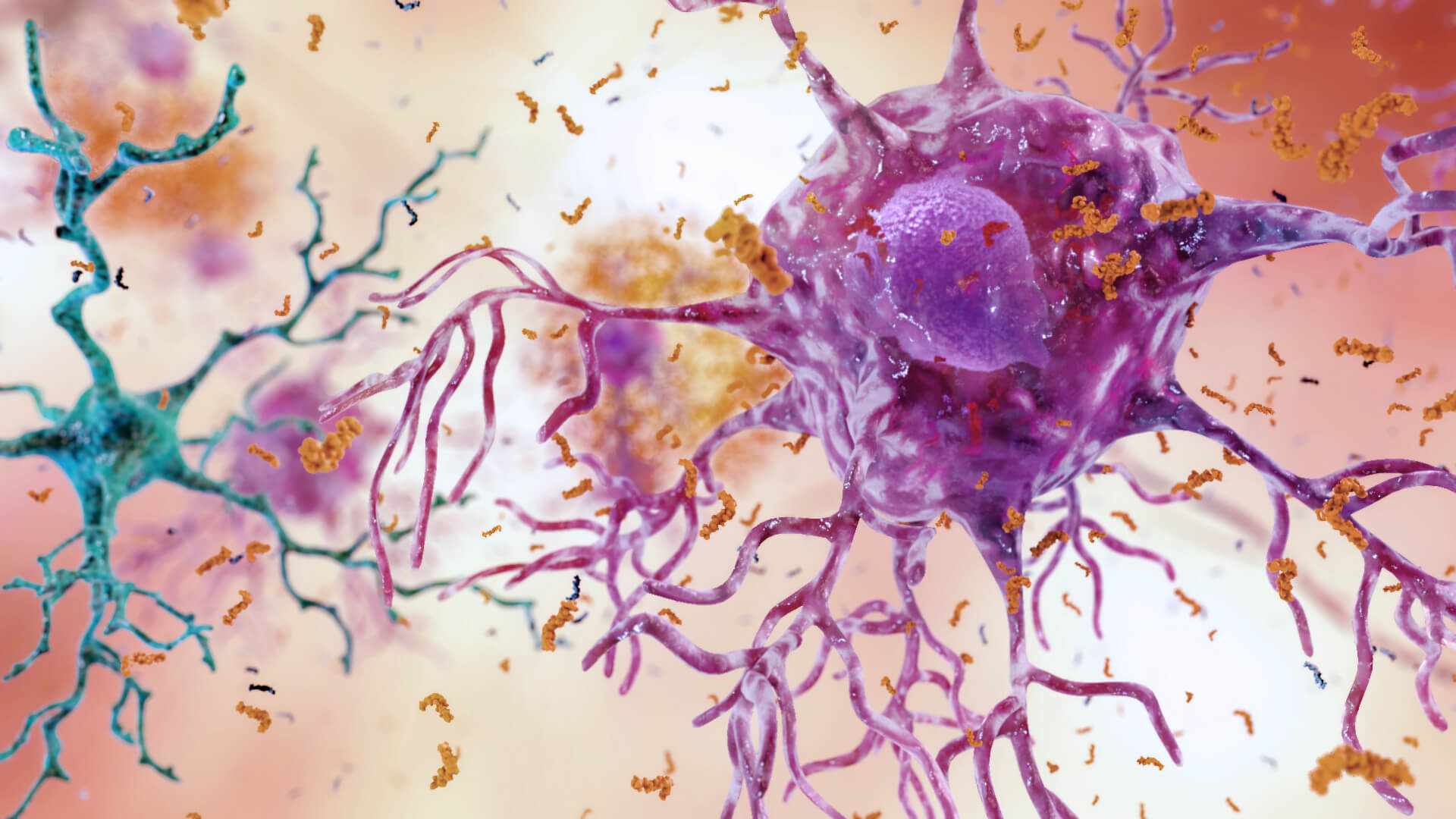
Extracellular aggregates can be removed from the brain and other areas of the body by specialized antibodies that hone in specifically on them and remove them from the tissue. Such antibodies can either be produced in the patient’s own body using a procedure similar to vaccination, or they can be produced external to the body and infused. In the vaccination strategy, doctors inject small fragments of the targeted amyloid (or genetic instructions so a person’s cells temporarily produce the amyloid themselves, as with the mRNA vaccines that have figured prominently in fighting the COVID-19 pandemic. Exposure to the amyloid in this form stimulates the immune system to produce antibodies that target the amyloid and remove it. In the infusion therapy, therapeutic antibodies are pre-made in bioreactors and injected into the circulation, where they go straight to work targeting the amyloid. A prominent recent parallel to this is cocktails of monoclonal antibodies like Regeneron’s REGN-COV2, which prevent early-stage COVID-19 infections from escalating into life-threatening illness.
An extremely promising variation of the infused antibody approach has been developed by Dr. Sudhir Paul, then at the University of Texas-Houston Medical School. Dr. Paul discovered a subset of human antibodies with catalytic activity against their target antigens. Conventional antibodies targeting extracellular aggregates bind to their target, and then have to either hand it over to immune cells for destruction, or drag it to the liver and kidneys for removal. But catalytic antibodies (“catabodies”) destroy the amyloid directly, cleaving it into smaller, harmless fragments, right on the spot.
Catabodies offer important potential advantages over the binding antibodies used in other amyloid-targeting immune therapies. One is that it is expected to reduce the dose needed to effectively clear extracellular aggregates from tissues. This is because binding antibodies can only trap one molecule of amyloid, whereas once a molecule of catabody is done slicing its way through one molecule of amyloid it can move onto the next, again and again, allowing each molecule of catabody to quickly destroy multiple amyloid molecules.
A second advantage is that in order to get rid of their cargo, most binding antibodies need to drag their captured beta-amyloid across the protective barrier that shields the brain. This passage of a large antibody-amyloid complex is likely difficult, and is likely one of the reasons why minor damage to brain blood vessels and swelling of the brain have been observed in some patients receiving binding antibody therapies. Catabodies avoid this problem entirely by destroying their target on-site, leaving only small fragments behind that can likely be passively degraded.