
To challenge cultural stereotypes and misconceptions about longevity, a new organization aims to engage people who create culture. Its list of “cultural ambassadors” includes Oscar- and Grammy-winning artists.
Reframing the case for longevity
Even as geroscience is becoming a respected field, producing breakthroughs and spawning dozens of startups, the public’s attitudes toward longevity still largely range from indifference to scorn, fueled by anti-longevity cultural norms and insidious misconceptions. This crucial bottleneck prevents geroscience from getting more funding, both public and private, and hampers its progress.
Organizations such as Lifespan.io, which last year merged with SENS Research Foundation to form Lifespan Research Institute (LRI), have engaged in public advocacy for years. However, it’s always good to have new allies.
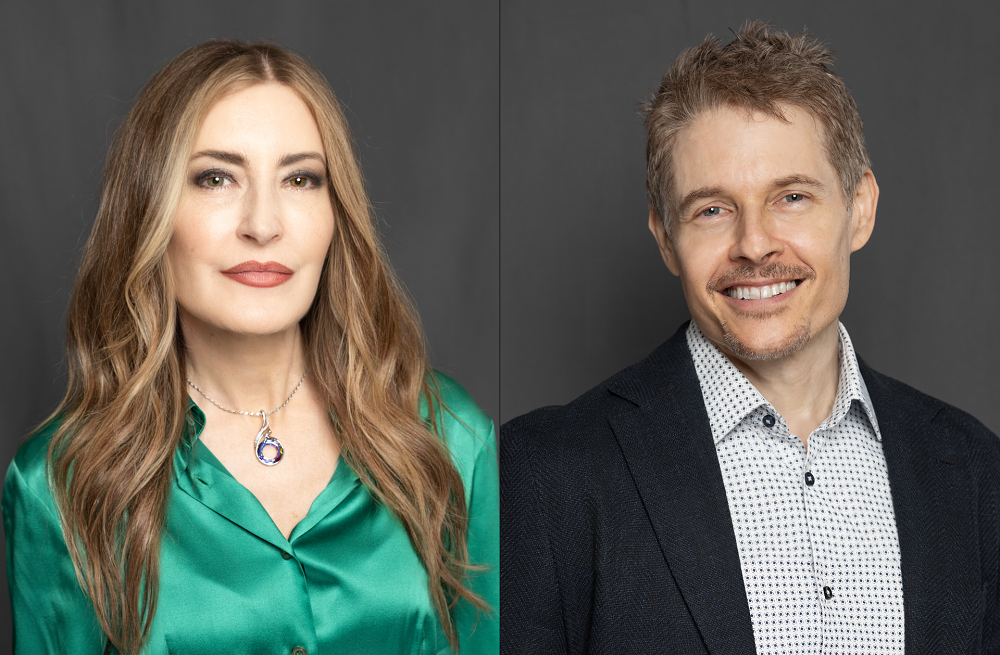
Changing cultural norms by engaging people who shape culture is the driving principle behind a new organization founded by a lifelong artist and leading advocate for longevity research, Maria Entraigues Alan, and creative producer Gary J. Alan, who also happen to be husband and wife. Over the past 20 years, Maria has raised money for longevity research, created several partnerships, and organized events and conferences.
Alliance for Longevity Science, Arts & Entertainment, or ALSAE (pronounced “all-say”), aims to bridge the worlds of geroscience and popular culture. By engaging directly with creators, artists, and storytellers, ALSAE seeks to dismantle the negative stereotypes and counter the misinformation that have long clouded the field of longevity, reframing the quest for longer, healthier lives as a positive and urgent humanitarian goal.
“After over 20 years of working to build and shape this field,” said Maria, “I realized that the science is finally moving, but the problem is the public’s perception. There’s a lack of information, and on the other hand, there are misconceptions. When people know something about the field, they very often have it wrong.”
Culture meets science
As an artist, Maria believes that there’s no better vehicle than the arts and entertainment to convey a message and inspire people. “The idea of our foundation,” she said, “is to work with creators, storytellers, and artists to make them advocates so they can send this message to their followers. We’re not going to be working directly with the public; we’re going to work more behind the scenes, educating and inspiring creators so they feel excited about this.”
“A big factor is the vacuum of awareness about the current state of longevity science,” Gary added. “Most of the public, who are unaware that this field exists, assume it’s in the realm of eternal, unrealized promises of curing diseases that have always been intractable. So, there’s a natural tendency to cast anyone trying to find solutions as an immoral person, because they’re selling you something you can never have. As a result, characters throughout history who have pursued more life or more youth have been significantly demonized.”
The portrayal of life extension in popular culture has indeed never been positive. One study from 2013, analyzing 19 movies shot between 1973 and 2011, found that pursuing life extension was almost universally portrayed as unnatural, arrogant, selfish, reckless, godless, heretical, and, in one instance, satanic. Even when the scientists in such movies are driven by the purest intentions, the pursuit of longevity does not end well, teaching the audience the lesson not to perturb “the natural way of things.”
ALSAE’s answer to this is to inspire a cultural change by directly engaging creators and turning them into “cultural ambassadors.” The current list on the organization’s website includes such notable names as renowned musician Herbie Hancock, actor and director Edward James Olmos, and Grammy winner Cheche Alara.
There are also “scientific ambassadors” to keep the message scientifically sound and disseminate basic knowledge about the science of longevity; these include Dr. Eric Verdin, President and CEO of the Buck Institute for Research on Aging; several other Buck researchers; Drs. Amit Sharma and Amutha Boominathan, scientists from LRI; and others. Finally, the industry leaders listed on the website include Reason, CEO of Repair Biotechnologies; David Gobel, CEO of Methuselah Foundation; and Keith Comito, President of LRI.
Through this network, ALSAE plans to foster a more accurate and compelling story about longevity science, one that emphasizes extending healthspan and rallies support for the research that can make it a reality for everyone rather than just a select few billionaires, as a popular stereotype suggests. “They will learn that it’s a positive thing about keeping ourselves healthy and adding life to years, not just years to life. If they get excited, they will hopefully impart this to their followers,” Maria said.
Events and collaborations
ALSAE is already planning two events in the next couple of months. “We are going to take between 10 to 12 top Hollywood showrunners, the people who create the TV shows we all watch, to one of the top research centers in California,” Maria said. “They’re going to spend the night, have a tour, see presentations, and attend a reception. In the beginning, we’re talking about curated, invitation-only salons.”
ALSAE is quickly integrating into the existing longevity advocacy infrastructure. This newborn organization is a member of Healthspan Action Coalition and collaborates with the Public Longevity Group (PLG), LRI’s recently announced initiative, which aims to build the world’s first AI-based “cultural intelligence system” for longevity by tracking real-time public sentiment and testing messages and narratives.
“We’re excited to support the Public Longevity Group’s initiative,” Maria confirmed. “It will be a great example of how AI can be applied within our field. We expect this to become a valuable resource for the longevity ecosystem, and a natural complement to ALSAE’s mission of uniting science and the arts to emotionally connect with the public and shift culture at large.”
“We’re proud to contribute to LRI’s crowdfunding campaign for PLG,” Gary added. “Not just because we support it, but because we want to see it thrive. We’re also happy to welcome PLG as an ALSAE partner alongside other like-minded organizations united by shared purpose. And we’re pleased to join LRI’s Lifespan Alliance, standing in solidarity with our aligned missions to cure age-related diseases. Together with LRI and PLG, we see the beginning of a strong and dynamic collaboration to ensure our shared mission gains the societal support it truly deserves.”